Choosing the Right Route for Cross-Border Cargo from Shanghai: A Multimodal Guide to Speed, Cost and Compliance
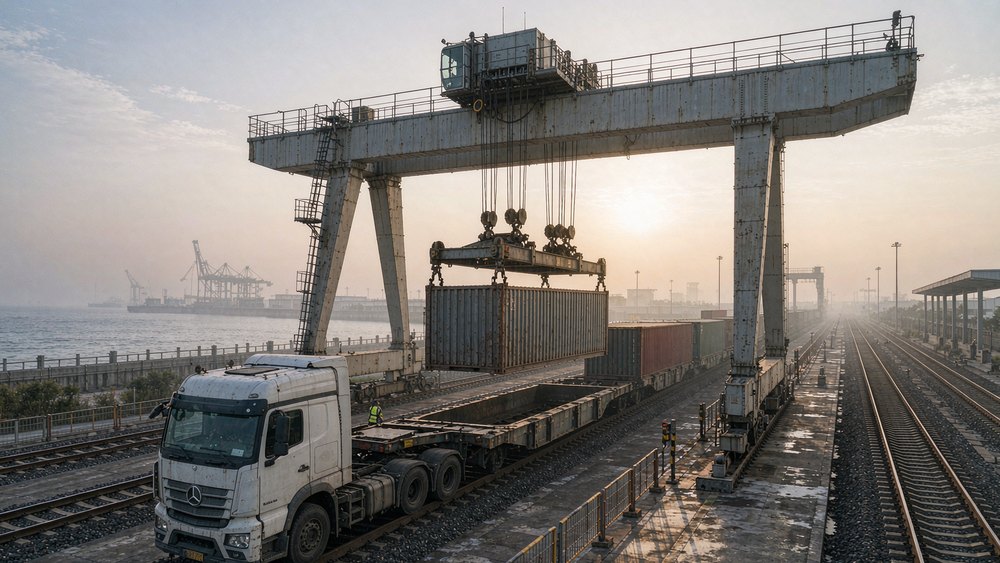
Cross-border cargo is not about speed or price in isolation — it is about the right route. Ocean, air, China-Europe rail and cross-border road freight each carry their own speed, cost and compliance thresholds. Get it wrong and you either overpay or watch a deadline slip at the border. This guide weighs the four main options for cross-border cargo from Shanghai, so every shipment leaves on the path that fits.
1. A Speed-and-Cost Profile of the Four Routes
Cross-border cargo from Shanghai typically moves by one of four routes. Shippers should match the route to cargo value and urgency first:
- Ocean freight: the lowest cost with ample capacity, ideal for bulk, low-value, time-tolerant cargo — but the transit is long and exposed to port congestion and peak-season space shortages;
- Air freight: a fast option for high-value, time-critical rush orders and samples, but the most expensive, with tight capacity in peak season;
- China-Europe rail: a mid-point in speed and cost, well suited to goods bound for inland Europe and a reliable peak-season buffer;
- Cross-border road: flexible and point-to-point, ideal for full and partial loads to neighbouring markets in Southeast and Central Asia.
2. Combining Modes for a Better Result
A single mode is rarely optimal. In Shanghai international freight, multimodal combinations are increasingly the norm: rush high-value items go by air, regular cargo by ocean, and inland European freight by rail, with last-mile delivery layered on top. By matching volume, deadline and budget, shippers can blend routes into a tiered plan that controls cost without missing a deadline.
Three Rules for Choosing a Route
- Urgency: tight deadlines favour air or China-Europe rail; flexible timelines can ride the ocean;
- Cargo value: high-value goods favour speed and insurance to avoid tying up capital in transit;
- Destination: port cities suit ocean, inland destinations suit rail or road for smoother final-mile connections.
3. Compliance in Cross-Border Transport
Cross-border cargo from Shanghai is inseparable from compliance. Shipments involve export customs clearance, certificates of origin and destination-country import permits — any slip can delay or detain the cargo. A Shanghai freight forwarder that knows destination policies and clearance flows can move compliance upstream to the booking stage and cut border delays.
4. Choosing a Reliable Cross-Border Logistics Partner
Look for a Shanghai freight forwarder on three points: familiarity with multimodal routing and its speed-cost trade-offs, the ability to tailor a tiered plan to your cargo, and transparent pricing with professional customs handling. YINGSHANG has years of experience in Shanghai trade logistics, offering one-stop Shanghai international freight, cross-border logistics, ocean and air booking, China-Europe rail and customs clearance to help shippers build routing plans by value and destination.
YINGSHANG Freight Tip: In cross-border cargo, choosing the right route is choosing real savings. YINGSHANG provides one-stop Shanghai export booking by ocean, air and China-Europe rail plus customs clearance, helping shippers send every load on the path that fits. Call 189-1692-3020.
Author: YINGSHANG Editorial Team
Reviewed: · Source: Shanghai Yingshang Car Rental Co., Ltd.
The YINGSHANG Editorial Team is the official content team of Shanghai Yingshang Car Rental, responsible for curating international logistics, import customs clearance and supply chain content, and for verifying pricing and reviewing content.
Freight rates, service and process details in this article were reviewed and updated by the YINGSHANG Editorial Team on 2026-09-24. International logistics prices fluctuate with the market and are subject to the day's quote; call 189-1692-3020 for the latest plans and rates.