When a Shanghai Export Comes Back for Repair: Return Routes, Documentation and Re-Export Points
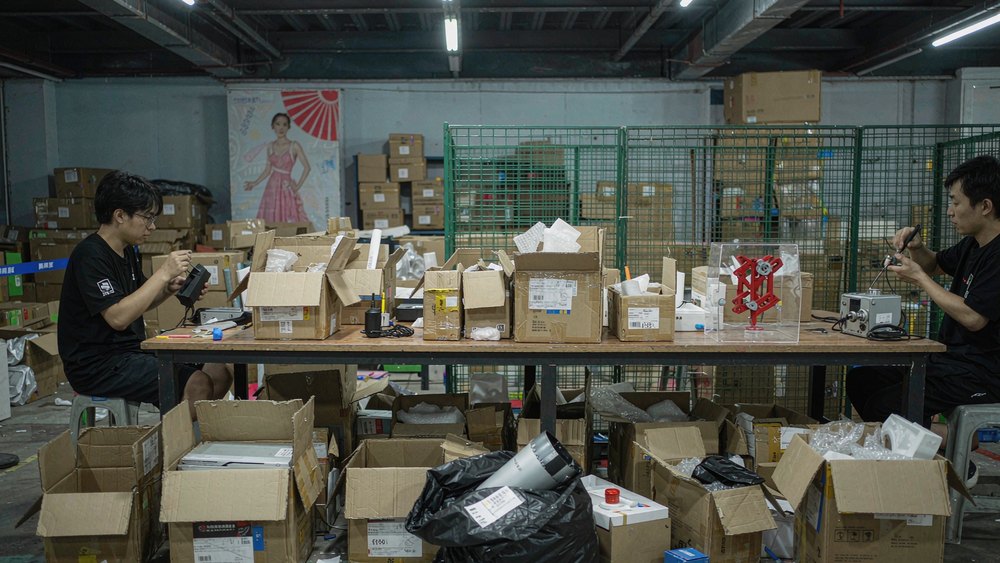
Selling the goods is only the first step. Across enough export batches, a shipment will eventually come back — a quality defect, a specification mismatch, packaging damaged in transit. Handled well, a return is a controlled after-sales event. Handled hastily, return freight, storage and re-filing turn a small loss into a long, expensive one. Here is how the three handling routes differ, what the documentation thinking looks like, when the bonded route applies, how to run the transport and warehousing, and how to keep cost and time under control. Specific declaration, duty and timing rules follow current customs and tax regulations — what follows is the framework.
1. How Returns Happen
Four triggers recur. Quality defects, where function or finish misses the contract standard. Specification mismatches — the wrong model, a mis-counted quantity, parameters that differ from the order. Transit damage: broken packaging, moisture, deformation. And missing accessories or documentation. The trigger matters, because it shapes the route — a step many companies skip. When the customer's feedback arrives, do two things first. Attribute the cause internally: whether the defect came from production, packaging or transport decides who bears the cost and whether a claim against the carrier or insurer is possible. Preserve the evidence: unboxing photos, inspection records and correspondence, filed by order. Whatever route follows, these materials are its foundation. Arrange the return only after those two steps, and the road ahead is much smoother.
2. Three Routes — Choose Deliberately
Not every return means physically bringing the goods home. Route one, repair and re-export: the goods come back, are repaired or repacked, and ship out again — the fit for high-value, repairable goods the customer still needs. Route two, local disposition: sell down locally, resell to another buyer or scrap on site — the fit when repair value is low and round-trip freight plus time already approaches the goods' worth. Route three, replacement: leave the defective goods to be disposed of locally and ship new stock directly — quick, and sensible when the loss is contained and the customer cannot wait. The choice is one calculation: can the value recovered by repair cover round-trip freight, declaration and storage, plus one to two months of time? For high-value, technically complex goods, repair-and-re-export usually stands. For low-value, high-volume shipments, local disposition often wins. Build the comparison into a fixed template and run each case through it, rather than deciding by feel every time.
3. The Documentation Thinking Behind Repair and Re-Export
On the repair-and-re-export route, the declaration is the core. The underlying logic is traceability: where this batch originally left from and how, why it is coming back, what will happen to it here, and where it goes after repair. The usual preparations fall into three groups. Traceability of the original export: the original declaration information, commercial invoice and packing list must line up — that is what proves the returning goods are the same batch. A repair agreement or warranty terms: a written arrangement with the overseas consignee covering the reason, who bears the cost, and the delivery arrangement after repair. And a factual statement of the case, cross-referenced with inspection records and photographs. As for the specific customs supervision mode, duty treatment and how exported-and-rebated status ties in — the detail is considerable and subject to change, so treat the competent customs and tax authorities' current rules as the reference, and have the broker pre-review the documents before the vessel sails, not after the container arrives.
4. When the Bonded Route Applies
Besides a conventional return import, there is a second path: moving the goods into a customs special supervision zone such as a comprehensive bonded zone for repair and testing, then re-exporting. The goods do not import as ordinary trade, which suits bulk returns with heavy inspection workloads — and, longer term, after-sales service arrangements of a standing kind. Whether it fits depends on a few conditions: whether the company or its partner holds the customs-recognised maintenance qualifications and ledger management conditions, whether the repair processes can be completed inside the zone, and whether the commodity falls within permitted categories. For exporters with steady volumes and routine after-sales needs, it is worth investigating feasibility and preparing in advance. For an occasional shipment or two, the conventional route is usually simpler. The two are not mutually exclusive — match the route to the batch, subject to what customs accepts.
5. Return Transport and Warehousing
Several practical points on the movement itself. Space: return volumes rarely mirror export volumes, so backhaul space sometimes needs separate negotiation, and peak seasons call for early booking. Equipment: choose the container by the state of the original packaging — returning in the original container versus re-stuffing differs meaningfully in cost. Warehousing: on arrival the goods pass through unloading, inspection, repair and repacking, so confirm in advance that the warehouse has inspection bays and working areas, and avoid shuttling goods between multiple facilities. Documents: the return bill of lading and packing information should map cleanly to the original export record, with piece counts and marks checked against the order at receipt. One point often missed: book the re-export sailing early, not after the repair finishes — the re-export date is what the customer's delivery promise ultimately rests on.
6. Cost and Timeline Control
The cost of a repair return falls into roughly five blocks: round-trip freight, port and storage charges, declaration-related costs, inspection and repair labour and materials, and the outbound freight for the repaired goods. Three controls. First, price the whole route before choosing it — the commonest failure is discovering a cost inversion halfway through. Second, compress time in port and in the warehouse: pre-reviewed documents and pre-booked inspection bays shorten the cycle considerably. Third, base any promise to the customer on the total cycle — return, inspection, repair, re-export, plus buffer — because that, not any single leg, is the delivery date you can actually commit to. On timing, remember that backhaul frequency on some lanes is far lower than the outbound schedule; confirm before assuming the return moves at the same rhythm.
7. The Log: Turning Returns into a Managed Process
Keep a return log by order, recording the reason category, the goods and batch, the route chosen, time consumed at each stage, total cost and outcome. Review it quarterly with three questions. Is the return rate concentrated in one defect type? If so, the cause sits in production, not logistics, and feeding it back to quality control is the real cure. Do the actual costs of each route match the model used to choose them — does the template still predict well? And is the average handling cycle falling, which is the test of whether process improvements are working. Returns are never welcome, but exporters with clean logs and complete files handle each one faster than the last. That is all the value a process can buy on this subject.
YINGSHANG Freight Tip: the first step of a repair return is not booking space — it is choosing the route. Weigh repair value against round-trip freight and time before moving. Pre-reviewed documents, pre-arranged inspection bays and an early-booked re-export sailing decide how long the whole cycle runs. YINGSHANG provides one-stop Shanghai freight forwarding, import-export logistics and customs coordination, with the transport and document chain of a repair return handled by one team. Call 189-1692-3020.
Author: YINGSHANG Editorial Team
Reviewed: · Source: Shanghai Yingshang Car Rental Co., Ltd.
The YINGSHANG Editorial Team is the official content team of Shanghai Yingshang Car Rental, responsible for curating international logistics, import customs clearance and supply chain content, and for verifying pricing and reviewing content.
Freight rates, service and process details in this article were reviewed and updated by the YINGSHANG Editorial Team on 2026-10-05. International logistics prices fluctuate with the market and are subject to the day's quote; call 189-1692-3020 for the latest plans and rates.