Fumigating Wood Packaging for Shanghai Exports: IPPC Marks, Heat Treatment and Documentation
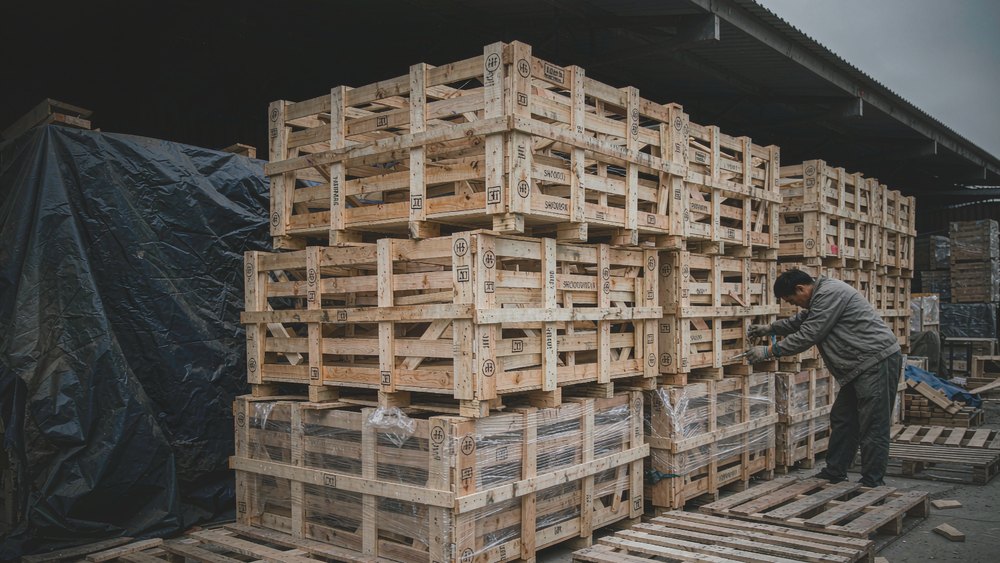
Wood packaging is the least expensive part of an export shipment and one of the easiest places for it to go wrong. The timber itself costs little, but a treatment carried out incorrectly, a mark that cannot be read, or evidence that does not match the cargo actually shipped can end in refusal, return or destruction at destination - or in re-treatment on the quay, with both cost and schedule lost. This article covers general treatment logic, marking rules and checking method only; treatment methods, document requirements and deadlines follow the official requirements of the destination country or region and the carrier’s and port’s current confirmation.
1. Why Wood Packaging Is Treated
Wood packaging is made from raw timber and can carry forest pests. Many countries and regions impose quarantine requirements on incoming wood packaging, and the common international framework asks that the packaging be treated by an approved method and carry a recognised mark, so that the risk of pests travelling with packaging is reduced. For an exporter the point is direct: whether wood packaging is acceptable is decided not at the port of loading but by the destination authority. The same crates on an identical shipment can face different treatment requirements, different marking requirements and even a preference for a particular method depending on where they are going. Settle the destination requirement at the quotation and booking stage rather than after the cargo has arrived.
2. What Falls Within Scope
Solid timber items are generally in scope: wooden pallets, crates, frames, dunnage, bracing, wedges and casks. Two categories are most often overlooked. Bracing timber added at the loading stage is easily dismissed as odd pieces. Support timbers and base runners supplied with machinery and shipped alongside it are just as easily missed. By contrast, processed wood products - plywood, particleboard, fibreboard and MDF - are generally not regarded as solid wood packaging requiring treatment, though that judgement still follows the destination requirement rather than assumption. There is also a common grey area: recycled or re-used pallets whose origin, treatment status and marking history cannot be traced. These carry the highest risk; either use new pallets or verify mark and status piece by piece before loading.
3. Two Main Methods: Heat Treatment and Fumigation
Heat treatment (HT) raises the timber to a specified core temperature and holds it for a specified period without chemical agents. Treated this way, the wood is normally ready to use immediately with no waiting for the agent to disperse, and many destinations regard it as the safer option. Fumigation (MB, methyl bromide) applies a specified concentration of the agent at a specified temperature for a specified period, after which the timber must be ventilated according to the rules. Note that some countries and regions restrict or are phasing down methyl bromide use, so confirm that the destination accepts the method before arranging it. Beyond these two there are other approved methods, including dielectric heating. Which one applies depends on the destination requirement, the form of the timber and what the treatment facility is actually equipped to do - and within the marking system each method has its own code, so choosing one method and marking another means the mark misstates the facts.
4. How to Read an IPPC Mark
Once treated, the timber is stamped with a recognised mark carrying four elements: the international symbol; a country code, for example CN for China; the code of the approved producer or treatment facility; and a treatment code such as HT or MB identifying the method used. The mark must be legible, identifiable and reasonably permanent, and is normally required on at least two visible faces of each timber item. Three errors recur: marking one face only, so the mark is invisible once the piece is turned; substituting an adhesive label for a stamp or brand, which some destinations do not accept and which can come off in transit; and covering the mark with later bracing, stretch film or paint. Any of the three can trigger re-treatment even where the treatment itself was carried out correctly.
5. When to Treat and How to Obtain Evidence
Treatment normally happens before loading. Pallets and crates are treated when they are made; packaging already in use can generally still be treated, subject to the practicalities of the chosen method. After treatment, obtain the corresponding certificate or record and retain the facility name, treatment batch, date and method - and make sure the batch recorded matches the wood packaging actually shipped, item for item. One principle is easily missed: the evidence and the mark point to this timber, not to this shipment. If a pallet is swapped or a brace added at loading without the record being updated, the paperwork looks complete while the substance does not match, and that is difficult to explain at an inspection. Check the wood packaging against the record at the loading stage and note the count and marks.
6. Recurrent Errors and How to Check
Five failures account for most of the trouble. First, re-used pallets of unknown origin whose marks cannot be traced or have worn away. Second, a mark applied to one face only, or printed on a label that does not hold. Third, evidence that does not match the batch actually used, for example after a pallet substitution. Fourth, wood packaging out of step with customs data, where crate description, package count or weight on the packing list and declaration disagree and attract attention together. Fifth, mixed treatment methods within one shipment, where the mark does not match how the timber was actually treated. Checking comes down to three moves: before loading, inspect each piece for a legible, complete, visible mark; after loading, match batch and quantity against the treatment record; before declaration, align the wood packaging description with the packing list and declaration so the documents do not contradict each other.
7. Transit, Transhipment and Multiple Ports
Where cargo passes through or is transhipped in an intermediate port, the official requirements of the final destination still govern; at the same time, check whether the transhipment port imposes anything further so the shipment is not held mid-route. If one shipment is split across several destinations, prepare the wood packaging to the strictest of those standards. A single standard simplifies administration and removes the risk of updating one set of documents and missing another. And when the quantity or specification of wood packaging changes, the treatment arrangement has to change with it - do not carry forward the record from the previous shipment.
8. Five Common Misjudgements
First, assuming only crates need treatment and overlooking dunnage, bracing and base runners. Second, treating the mark as sufficient without checking that the record matches the batch. Third, treating everything, including plywood and MDF that fall outside the usual scope, and paying for work that was never required. Fourth, assuming a valid treatment guarantees smooth clearance, when consistency across documents, description and packaging is also examined. Fifth, assuming treatment can be arranged at destination, ignoring what re-treatment on the quay costs in time and money.
9. A Step-by-Step Checklist
Work in this order once the booking is confirmed: 1) confirm the destination requirement for wood packaging and the treatment methods it accepts, at the quotation stage. 2) List every piece of wood packaging on the shipment, including pallets, crates, dunnage and bracing, so nothing is omitted. 3) Arrange treatment by the confirmed method and obtain the record, noting facility, batch and date. 4) Apply a clear, durable and complete mark to visible faces after treatment. 5) At loading, inspect each piece for its mark, and confirm that no pallet was swapped and no brace added without the record being updated. 6) After loading, match the treatment record batch and quantity against the packaging actually used. 7) Before declaration, align the wood packaging description with the packing list, customs declaration and commercial invoice. 8) Retain the record and your check sheet so the same destination can be handled to the same standard next time.
YINGSHANG Freight Tip: three rules on wood packaging - take the requirement from the destination, not from habit at the port of loading; make the mark, the treatment record and the actual batch agree, all three together; and write small changes such as a swapped pallet or an added brace back into the record, because otherwise the paperwork is compliant and the shipment is not. YINGSHANG provides Shanghai ocean and air booking, customs coordination and international freight forwarding, and can help review wood packaging and document consistency before shipment. Call 189-1692-3020.
Author: YINGSHANG Editorial Team
Reviewed: · Source: Shanghai Yingshang Car Rental Co., Ltd.
The YINGSHANG Editorial Team is the official content team of Shanghai Yingshang Car Rental, responsible for curating international logistics, import customs clearance and supply chain content, and for verifying pricing and reviewing content.
Freight rates, service and process details in this article were reviewed and updated by the YINGSHANG Editorial Team on 2026-10-10. International logistics prices fluctuate with the market and are subject to the day's quote; call 189-1692-3020 for the latest plans and rates.