Export Packaging and Pallets from Shanghai: Stacking Strength, Sizing and Marking
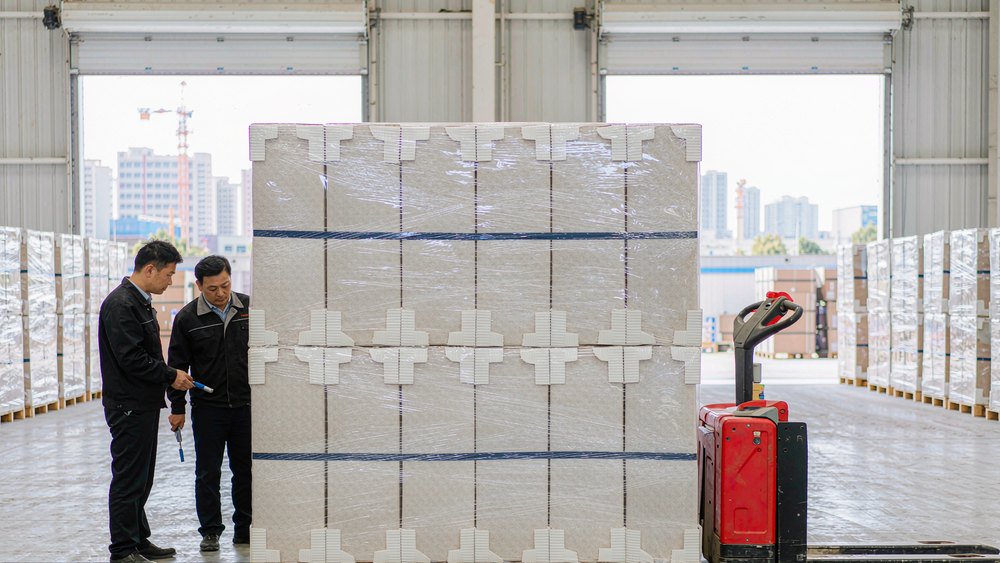
Packaging is often treated as a cost to squeeze: a thinner carton, a used pallet, two fewer wraps of film, a few yuan saved per box and a few hundred per shipment. The saving is usually returned at destination in another form, through crushed cartons, collapsed pallets, damp cargo, or a delay caused by marks that customs could not read. Packaging carries three functions in an export: protecting the goods, fitting the load, and carrying information. Miss one and the earlier saving is repaid later, and more expensively. What follows runs in working order: the stages packaging has to survive, pallet and container geometry, how stacking strength is judged, how marks are written, extra measures for special cargo, incoming inspection, the cost trade-off, and the record to keep.
1. Which stages must export packaging survive?
Four, each loading the package differently. In-plant handling and storage: clamp trucks, multi-layer stacking, damp warehouse floors, where crushed bases and moisture damage appear first. Loading and sea transit: stacking inside the container, vessel roll and vibration, and the temperature and humidity cycle that causes container rain as the walls cool at night. Handling and transhipment: port equipment, relay at a hub, devanning at destination, with impact concentrated on corners and the base. Destination storage and distribution: some customers put the pallet straight onto racking, others take it whole into the warehouse, and pallet strength and size are tested again. The requirements differ, so design to the severest stage and the rest follow. Design only for in-plant storage and the failure tends to happen at sea or at devanning.
2. How should pallet size be matched to the container?
It is a balance between floor utilisation and stability. Common sizes include 1200 by 1000 millimetres, 1200 by 800 and 1100 by 1100. Two things decide the choice. First, destination and customer practice: Europe leans towards 1200 by 800, Japan and parts of Asia towards 1100 by 1100, North America towards 48 by 40 inches, roughly 1219 by 1016. Second, internal width: a standard dry container is about 2.35 metres across, so two 1200 by 1000 pallets leave a strip unused while two 1200 by 800 fit more tightly at some cost in stability. Length matters too: internal length is about twelve metres in a 40-foot high cube and 5.9 in a 20-foot, and whether the pallet length divides into that decides how many rows fit and how much void remains. Void is not harmless; it needs airbags or dunnage, otherwise pallets shift in transit. The pallet is also cargo: wooden pallets need ISPM 15 heat treatment or fumigation with the IPPC mark, while plastic and paper pallets follow destination requirements.
3. How is stacking strength estimated and tested?
Estimate the demand, then verify it. Three figures define the demand: carton weight, number of layers, and duration of stacking. Sea stacking lasts weeks, and board loses strength under sustained load and high humidity, so long-duration designs apply a substantial discount to short-term compression values, with the discount depending on board grade, flute type and moisture conditions rather than a single number. Verification comes from testing. A compression test loads an empty carton until it deforms and reads the maximum; a stacking test loads the actual number of layers for the actual duration and observes deflection; tilt and vibration tests assess the whole pallet. Smaller shippers rarely have a lab, and a practical substitute is one destructive check: pack real goods in the same cartons, stack to the planned height and hold for the expected transit period, then inspect the bottom layer. That single test usually costs less than one ruined shipment. Carton strength also depends on how the box is filled and on internal supports, not on board grade alone.
4. How should marks be written to avoid mistakes?
Three layers, kept apart. Shipping marks carry the consignee reference, destination, carton number and total, gross and net weight, and dimensions, all of which must match the packing list and invoice, since any mismatch can trigger inspection or make separation at destination difficult. Handling marks use the standard pictorial symbols for this way up, keep dry, fragile, centre of gravity and do not stack, and should not be replaced with words, because the people handling the box may not read the language. Compliance marks cover the IPPC mark on wooden packaging, UN numbers and hazard class labels for dangerous goods, and any destination-specific requirement. Position is fixed as well: shipping marks on two adjacent sides, handling marks on at least two visible faces, compliance marks where the rules require. One habit worth keeping: put less on the mark, not more, because every extra line is a line that can be missed when the shipment is amended.
5. What extra care do special cargo categories need?
Four cause most trouble. Fragile goods: the issue is not more stretch film but eliminating movement, so the inner fit should be close, each item separated, and no gap left between product and carton; glass and ceramics benefit from corner protectors and dividers. Liquids: leave headspace for expansion, keep closures upward with secondary sealing, add absorbent material inside the carton, and mark this way up and keep from leaking; sea transit adds pressure and temperature swings. Heavy and oversized items: a crate needs feet for the forklift, a low centre of gravity, marked lifting points and internal bracing so the sides are not carrying the load. Temperature-sensitive and moisture-sensitive cargo needs desiccant and humidity indicator cards plus a barrier liner, with the container confirmed dry before loading. All special requirements belong at booking, because carriers apply extra declaration and stowage rules to dangerous, temperature-controlled and oversized cargo.
6. How should packaging cost be weighed against damage, and how is incoming stock inspected?
Weigh them together rather than comparing carton prices alone. Total packaging cost includes materials, labour, loading efficiency and the expected cost of damage; saving a little on board that reduces the number of layers or wastes container space can raise the transport cost per unit. The decision point usually arrives at two questions: does this need another pallet, and does this need another container? Once either is triggered, upgrading the packaging is normally cheaper than saving material. Incoming inspection is the last gate, and four checks cover most of it: appearance and compression marks, rejecting damp, blistered or deformed cartons outright; dimensions and tolerance against the pallet; a simple load check on a sample from each batch; and mark verification against the packing list. Keep the inspection record, because once the container is sealed every later dispute is settled by that record or not at all.
7. What belongs in the packaging file?
One file per shipment, four parts. The packaging plan: carton type and board grade, pallet size and material, inner packing and securing method, and why, tied to the stage whose loads drove the choice. The test or verification record: compression samples, photographs and conclusions from the stacking check, pallet strength evidence. The incoming inspection record: batch, sample size, findings and how they were resolved. And images: the finished pallet, a close-up of the marks, the loaded container interior. File them with the packing list and customs documents, named by date, customer and bill of lading number. The file pays for itself twice: it supports a damage claim, and it lets the next similar shipment reuse the plan instead of starting again. Packaging capability, in the end, is the accumulation of these records.
YINGSHANG freight note: three habits. Design packaging to the severest stage, and sea humidity is the one most often underestimated. Size pallets against container width and length before local custom. Keep marks to the necessary lines, because the extra ones are what get missed when a shipment is amended. YINGSHANG has operated since 2012, with 285 self-owned Shanghai-plate vehicles and more than 500 corporate clients on the rental side, and international freight covering booking, customs declaration, port delivery and document coordination. Rental 133-7002-5039, freight 189-1692-3020, yingshangcar@163.com, open Monday to Sunday 08:00-22:00.
Author: YINGSHANG Editorial Team
Reviewed: · Source: Shanghai Yingshang Car Rental Co., Ltd.
The YINGSHANG Editorial Team is the official content team of Shanghai Yingshang Car Rental, responsible for curating international logistics, import customs clearance and supply chain content, and for verifying pricing and reviewing content.
Freight rates, service and process details in this article were reviewed and updated by the YINGSHANG Editorial Team on 2026-10-18. International logistics prices fluctuate with the market and are subject to the day quote; call 189-1692-3020 for the latest plans and rates.