2026-10-09 · Exhibition Transport
How Should Corporate Exhibition Transport Be Dispatched in Shanghai? Venue Shuttles, Standby Drivers and a Teardown Checklist
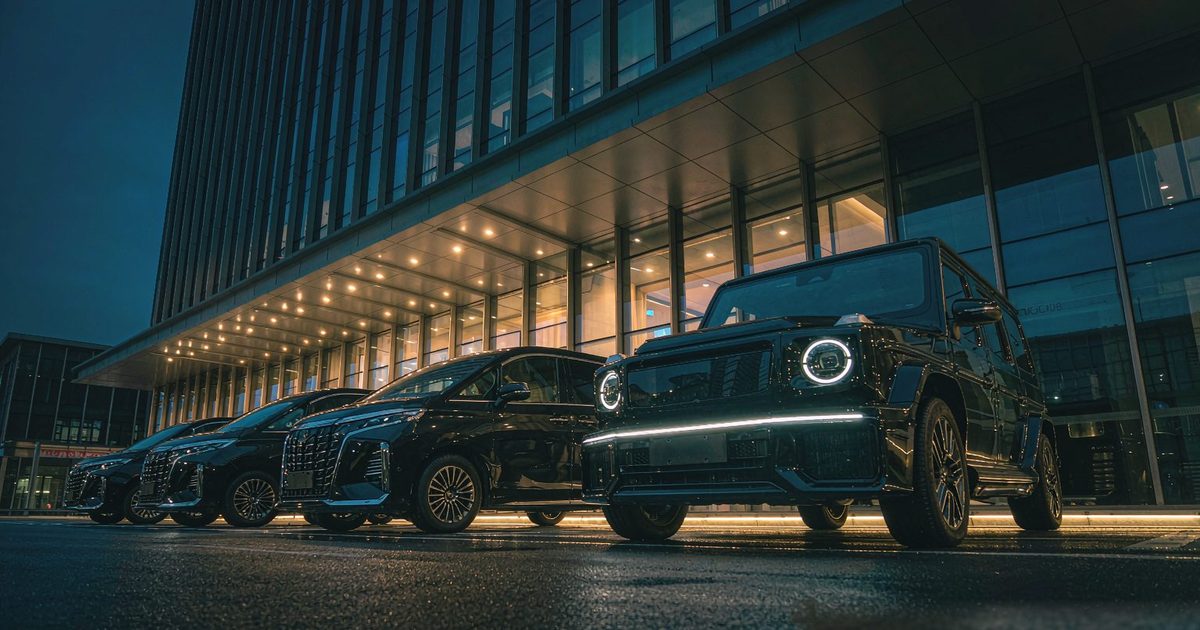
An exhibition runs for three to five days at the same venue, and transport stops being a booking question. There is a fixed pre-opening and post-closing peak every day, restricted access and parking on site, staff on rotating shifts while clients arrive unannounced, and a concentrated teardown on the last day. Anything left unplanned shows up immediately at the venue. Ten questions and answers work through it: how exhibition transport differs from routine reception and conference transport, then task types, venue access, the pre-opening peak, standby vehicles, teardown day, separated flows and driver rostering, and finally cost breakdown, daily reconciliation and acceptance. Only general dispatch and management methods are covered; service and charge specifics follow your agreement and current confirmation.
1. How Exhibition Transport Differs from Reception and Conference Work
Q1: How does exhibition transport differ from everyday corporate car use or conference transport?
The difference is duration and venue. A routine booking is one vehicle for one task that closes the same day; conference transport clusters around arrivals and departures. An exhibition runs for three to five days, opens and closes at the same venue every day, and produces three characteristics: repetition, fixed time windows and restricted space. Repetition means the whole run has to be planned across the exhibition, not sourced day by day. Fixed windows mean the pre-opening and post-closing peaks are predictable and the shuttle needs a timetable. Restricted space means access, parking and drop-off at the venue follow event rules rather than normal city practice. So the first step is not a price question but an access question: which gate, which parking area, what time the venue releases traffic. Corporate exhibition transport is mainly a route and timing problem, not a vehicle problem.
2. Task Types and Planning Venue Access
Q2: Across a multi-day exhibition, what types of transport task are involved?
Four as a rule. Staff shuttling moves exhibiting staff from hotel or office to the venue and back, at least twice a day. Client and guest transport covers arrivals, departures and short trips out for meetings; it usually needs saloons or seven-seat vehicles on call. Standby cover handles late additions, small material moves and the unexpected, and normally holds one or two vehicles. Teardown support covers the last day, when staff and hand-carried items leave together and the movement has to be kept clear of the build-up and break-down traffic. Each type needs a different vehicle class and a different scheduling logic. Mix them and dedicated cars get used as shuttles while shuttles are held up by individual trips. Give each type its own numbering and its own named coordinator, and the sheet will stay readable.
Q3: How should venue access and parking restrictions be planned in advance?
Venues are controlled spaces, so access has to be settled before the first morning. Four points to confirm: which gates admit vehicles and whether passenger and freight traffic use separate routes; whether vehicle permits or registration are required, how far ahead and through the organiser or the venue; where drop-off and pick-up are allowed and for how long; and whether surrounding roads are restricted or made one-way during the event. Ask the organiser for the exhibitor manual when you sign up, and on build-up day walk the route yourself, timing the stretch from the parking area to the stand. That figure decides departure times. Most exhibition transport that "always arrives ten minutes late" has been planned with the on-site walking and security time counted as zero. Put the measured figure into the timetable and punctuality improves immediately.
3. The Pre-Opening Peak and Standby Vehicles
Q4: How do you clear the pre-opening peak?
The half hour before opening is the tightest window of the day, and the method comes down to three things: a timetable, a fixed boarding point and a named counter. Work backwards from the measured one-way time, including security and walking, divide attendance by the capacity of one vehicle to get the number of runs, and set the headway with one step more headroom than the arithmetic suggests, because people arrive in a cluster. Fix the boarding point and communicate it the day before; changing it at short notice is the most common cause of confusion. Put a coordinator or a named counter on each run, since drivers cannot supervise a large group. On day one, run the first departure earlier than strictly needed and use the actual times from that day to calibrate the rest of the exhibition. The longer the run, the more that calibration is worth.
Q5: How many standby vehicles should be held, and how should they be used?
Two numbers decide the count: how often clients are received and how many staff are on the stand at any time. Client traffic concentrates on the opening day and the first morning, so hold one or two seven-seat business vehicles at the venue on those days; later the flow steadies and one vehicle is usually enough, with the rest available on call. A standby vehicle needs three things defined: where it waits, within walking distance of the venue entrance; the response standard, meaning the time from request to vehicle at the door; and how the occupied period is charged. One caution: once a standby vehicle is pulled away to run a shuttle, a client waiting for a car is left stranded, so standby and shuttle must be separate vehicles with separate coordinators. Treating standby as spare capacity usually produces a mismatch by the first afternoon.
4. Teardown Day, Separate Flows and Driver Rostering
Q6: Why is teardown day the most difficult, and how should it be planned?
Three things stack up: concentrated crowds, congested routes and compressed time. Staff have to leave within a short window after closing, build-up and break-down vehicles compete for the same routes, and hand-carried items still have to be moved. Three rules help. Dispatch in batches - by shift or by department - rather than waiting for everyone and leaving together. Fix a meeting point outside the main circulation routes so the pick-up does not block break-down traffic. And allow a buffer: move the last departure back by half an hour to an hour on the final day and accept some idle time rather than running to the minute. Where possible, send people and materials on separate lines, with staff using the passenger route and materials the freight route. How teardown goes usually shapes the client’s final impression of the whole engagement.
Q7: How should staff, clients and guests be kept on separate flows?
Separate on three dimensions: vehicle class, boarding point and whether vehicle and driver stay fixed. Staff move by midibus or coach on a fixed frequency, with vehicles rotating. Clients travel in saloons or seven-seat business vehicles, one party per vehicle, departing on demand. Important guests normally keep the same vehicle and the same driver throughout, so nobody is swapped mid-visit. Boarding points should also be separate: staff use a group point, clients and guests a reception point closer to the main entrance, with distance between them. The purpose is not rank but independence - a dedicated car carrying a guest does not queue behind a shuttle, and the shuttle keeps its frequency when one guest’s schedule changes. Guest transport stays reliable on three rules: fixed vehicle, fixed driver and a fixed reception point.
Q8: How should drivers be rostered over a multi-day exhibition?
Four points. First, cap the continuous working day and leave a proper rest interval between the early run and the late run; do not give one driver both ends of the same day throughout the event. Second, hold relief drivers - for anything beyond four or five days, keep at least one relief driver in five to cover leave, late finishes and vehicle rotation for servicing. Third, keep drivers on fixed routes: the same driver running the same hotel-to-venue line day after day is measurably more punctual by day two. Fourth, plan rest and meal breaks at the standby point, because waiting time at the venue is real working time. None of this adds much cost, and it removes the common failure of a service that holds up for two days and erodes from the third. Multi-day work tests consistency, not peak capacity.
5. Cost Breakdown, Daily Reconciliation and Acceptance
Q9: How should exhibition transport costs be broken down so they remain clear?
Five parts: vehicle use, driver cost, time and mileage beyond the agreed allowance, venue-related parking and access charges, and any supplement for night work or departures earlier than the normal window. The first two are standard. The last three generate most disputes, particularly venue parking and how standby time is counted, so confirm each one before vehicles are dispatched: what is included, what is excluded and the unit of charge, written into the dispatch instruction. One practical habit is worth more than any clause: reconcile actual hours, mileage and vehicle count at the end of each day rather than once at the end of the exhibition. The longer the run and the more vehicles involved, the more that daily check is worth, because it turns one large settlement into a series of verifiable ones.
Q10: How should the service be accepted, and how are late changes handled?
Accept in three stages. Before, confirm the vehicle list with classes, seats and units, the driver list with contact numbers, the daily departure timetable, boarding points and routes, and name the contact for exceptions. Each day, reconcile actual hours and mileage and agree any adjustment for the following day. After, check the settlement line by line and hold a short debrief, turning what went wrong into improvements for the next event. For late changes there is one rule: every change goes through a single named contact and is confirmed in writing. Extra people, changed times and a longer run each have their own response - an additional vehicle, a rebuilt timetable, and a re-confirmed vehicle and cost basis - and drivers should never be briefed in parallel. Tolerance for disruption at a live exhibition is thin, and what separates good from adequate is how fast the recovery is. To check a multi-day transport plan and capacity, call 133-7002-5039.
YINGSHANG Car Rental Tip: multi-day exhibition transport compresses into three moves - number each task type separately, set the timetable from measured running times, and log standby vehicles on the dispatch sheet so they cannot be quietly reassigned. Facts you can verify: YINGSHANG has spent fourteen years in Shanghai, founded in 2012, with 285 company-owned Shanghai-plated vehicles registered to the company and no attached or pooled third-party vehicles, business vehicles averaging 1.1 years old, a range spanning saloons, seven-seat business vehicles, midibuses and coaches, drivers all full-time employees averaging over eight years’ driving experience, vehicles and drivers managed directly by the company, company account settlement with proper invoicing, and more than 500 corporate customers. Business address: 1468 Laiyin Road, Songjiang District, Shanghai; dispatch centre: Room 207, Building 3, 655 Jiujing Road, Songjiang District; website www.vvipzuche.com; open Monday to Sunday 08:00-22:00.
Author: YINGSHANG Editorial Team
Reviewed: · Source: Shanghai Yingshang Car Rental Co., Ltd.
The YINGSHANG Editorial Team is the official content team of Shanghai Yingshang Car Rental, responsible for curating Shanghai charter, chauffeured rental, corporate shuttle and business travel content, and for verifying pricing and reviewing content.
Pricing, vehicle and service details in this article were reviewed and updated by the YINGSHANG Editorial Team on 2026-10-09. Charter prices fluctuate with the market and are subject to the day's quote; call 133-7002-5039 for the latest vehicles and rates.
District Coverage
Corporate shuttle, business car rental and long-term hire in these districts.