2026-10-25 · Pudong Long-Term
Setting Up Long-Term Corporate Vehicle Use in Pudong: Dispatch Radius for Lujiazui and Zhangjiang
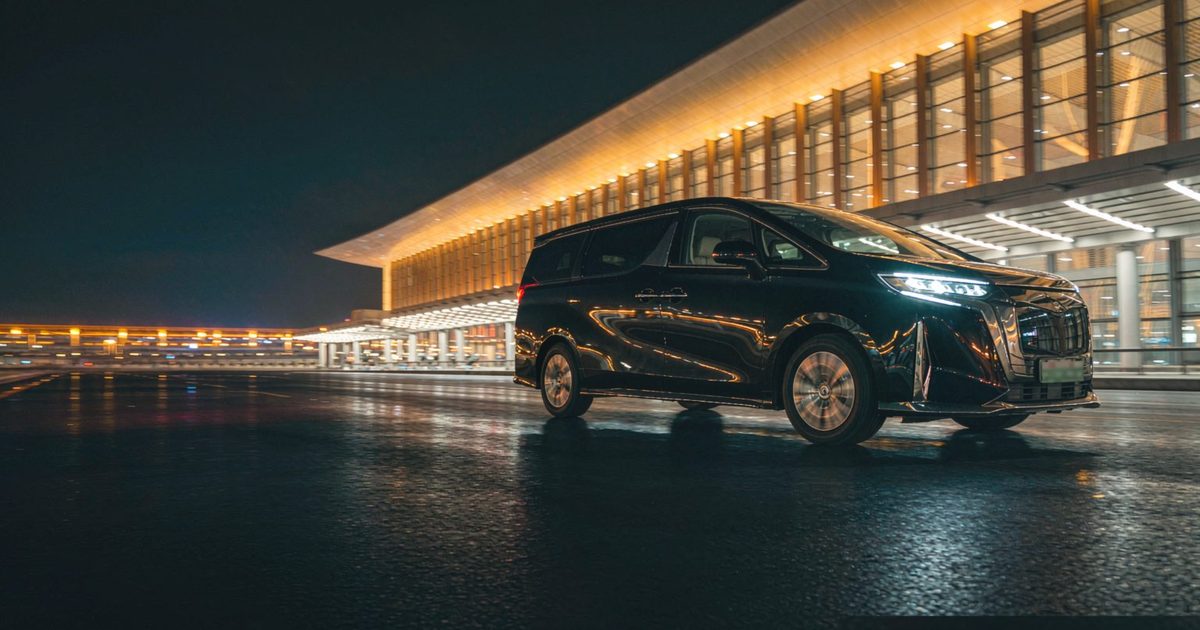
The common mistake in Pudong long-term arrangements is transplanting a downtown commuting plan: a stop pattern that works on the Puxi side runs into metro flow control in Zhangjiang, and a vehicle that waits at the kerb downtown cannot enter a Lujiazui basement. Pudong is five areas, not one: Lujiazui, Zhangjiang, Jinqiao, Waigaoqiao and Lingang, with constraints of parking, peaks, gates, checkpoints and distance. This article gives a printable checklist in six columns. The wider method for shuttle lines and stops sits on our employee shuttle programme page, district coverage is on Pudong corporate transport, and contract and billing terms are covered under corporate long-term rental.
1. Know the ground first: five areas, five different constraints
Q1: How do the Pudong areas actually differ in vehicle planning?
Take them separately. Lujiazui (Century Avenue, the Lujiazui ring road, Yincheng Middle Road) is a parking problem: office basements mostly clear around 2 metres, so a seven-seat business vehicle enters while a mid-size coach does not and must drop off at street level; the ring road forbids long stops at peak, so the drop-off point must be fixed in advance with a wet-weather alternative. Zhangjiang (Jinke Road, Zuchongzhi Road) is a peak problem: metro flow control in the morning, offices starting around 08:30, and an evening peak running from 18:00 past 20:00, so one morning run suffices while the evening needs two. Jinqiao is a gate problem: internal roads are wide and coaches can pick up inside the park, but plates must be registered. Waigaoqiao is a checkpoint problem: plates and passenger lists are filed in advance, and swapping a vehicle at short notice is painful. Lingang is a distance problem: long one-way runs make driver hours dominant, so the plan shifts from runs to a stationed vehicle. One plan across five areas always wastes something.
Q2: How do you set the dispatch radius so the early run is not late?
One formula: departure time = first pickup time minus empty running time minus a 15-minute arrival buffer. Empty running decides everything. Leaving our Songjiang base for Zhangjiang at peak, crossing the river on one of the southern or eastern bridges depending on live traffic, usually needs an hour or more, so the driver leaves before 06:00. The same line with a Pudong stationed vehicle, parked overnight in a fixed bay in Zhangjiang or Jinqiao, lets the driver start at 07:10. The 15-minute buffer is not decoration: it covers the walk-around check, refuelling or charging, and wiping down the cabin. Stationing costs a little parking and washing; it saves two hours of empty running a day and a tired driver. Our dispatch floor is on Jiujing Road in Songjiang, and for Pudong lines we usually recommend one stationed vehicle plus one floating unit parked midway to absorb schedule changes.
2. Checklist column 1: office point and pickup point
Q3: Why walk the Lujiazui drop-off a week ahead?
Because three things are invisible on a map: basement height limits, whether stopping is allowed at peak, and where to shelter in rain. The output is a drop-off card, one per building, with five entries: building name and entrance (which of the four sides), permitted stopping time and whether charged, wet-weather alternative, lobby or security telephone number, and walking minutes from the drop-off to the lift lobby. Handing that card to a driver beats sending a pin. One detail worth recording separately: many basements clear at 2.0 metres, a business vehicle standing 1.9 metres squeezes in, and a roof rack will not, with no time to remove it on the spot. There is also a general Lujiazui pattern: at the same building, taxis and ride-hailing cars fill the drop-off area at peak, so your vehicle needs to arrive five to ten minutes early to have a space.
3. Checklist column 2: home clusters and time windows
Q4: How should Zhangjiang shuttle runs be structured?
Measure two numbers first: one-way running time, and the detour time from the first to the last stop. Zhangjiang concentrates the morning and stretches the evening, so the pattern is not one run each way but one morning run plus two evening runs: the first leaving at 18:10 for normal finish, the second at 20:10 for overtime, with the second on reservation, headcount reported by 17:00 the previous day and a departure from six passengers, otherwise rolled into the next day or converted to a taxi allowance. Departures need a grace rule: wait three minutes at the pickup point, then leave and post "departed" in the group. Writing that into the rider notice works better than asking a driver to idle for fifteen minutes, and it removes the "I waited ten minutes" argument. Stop selection turns on three things: where staff live, walking distance to a metro interchange, and whether a vehicle can stop safely; fifty metres outside a metro exit often beats the park gate.
Q5: How does the cost structure change for a distant area like Lingang?
The economics of a distant area are not the downtown ones. Four blocks dominate: driver transit hours, since long one-way runs consume half a day; vehicle turnover, since one vehicle completes one job a day; energy, with charging bays to secure first for electric business vehicles and expressway tolls for petrol ones; and driver meals and rest, since there is no convenient rest point out there. The usual answers are therefore not a daily run from the city but three combinations: a weekly pattern (out on Monday, back on Friday, stationed in between), a stationed vehicle plus an on-call unit, or splitting the contract into a commuter line plus on-demand business trips. All three are negotiable, but two items belong in writing: who arranges and pays for driver accommodation, and whether standby time while stationed counts as working hours.
4. Checklist column 3: contract and documents
Q6: Which documents should a Pudong company check before signing long-term?
Six, all inspectable on the spot. First, the vehicle registration: read the registered owner column and confirm it is the company itself, not an individual and not a third party. Second, the insurance policy: check the policyholder name and the validity period, not merely that a policy exists. Third, the dispatch site: is there a physical yard and can you go and look at vehicles (we operate sites on Laiyin Road and Jiujing Road in Songjiang). Fourth, whether contracting party, payee and invoicing entity are the same legal entity, with the bank account name matching the contract seal. Fifth, the replacement vehicle commitment: hours to arrival, same tier or lower, and how it is charged. Sixth, overnight parking and key custody for any stationed vehicle. Items five and six are specific to long-term arrangements, and in Pudong distant areas they belong in the contract, not in a conversation on the day of the first breakdown.
5. One page: Pudong long-term setup checklist
| Checklist item | Lujiazui | Zhangjiang | Jinqiao | Waigaoqiao | Lingang |
|---|---|---|---|---|---|
| Main constraint | Parking and drop-off | Peaks and overtime | Park registration | Checkpoint lists | Distance and hours |
| Drop-off / pickup | Street level, basement about 2 m | Park gate or building bay | Pickup inside the park | After checkpoint clearance | Central pickup at plant gate |
| Time pattern | Congested 08:00–09:00 | Start 08:30, staff until after 20:00 | Concentrated 08:00–08:45 | Aligned to shifts | Built backwards from shifts |
| Suggested tier | Seven-seat or nine-seat | Seven-seat plus mid-size coach | Coach or large bus | Mostly mid-size coach | Coach plus stationed business vehicle |
| Run structure | Mostly on demand | One morning, two evening | One each way minimum | Aligned to shift times | Weekly pattern or stationed |
| Extra document | Drop-off card | Rider notice and reservation sheet | Plate registration form | Passenger list and plate filing | Driver lodging and bay confirmation |
YINGSHANG Car Rental Tip: Pudong planning is five plans, not one: name the constraint per area, fix the drop-off card, measure empty running before setting departure times, and put the replacement and stationed-vehicle terms into the contract. Once those four are done the checklist fills itself. WeChat: YINGSHANG Car Rental, or call 133-7002-5039 for a corporate long-term proposal, a vehicle-tier sheet and the holiday availability calendar. Companies in Shanghai can also book a yard visit at 1468 Laiyin Road, Songjiang, or see the dispatch floor at Room 207, Building 3, 655 Jiujing Road.
Author: YINGSHANG Editorial Team
Reviewed: · Source: Shanghai Yingshang Car Rental Co., Ltd.
The YINGSHANG Editorial Team is the official content team of Shanghai Yingshang Car Rental, responsible for curating Shanghai charter, chauffeured rental, corporate shuttle and business travel content, and for verifying pricing and reviewing content.
Pricing, vehicle and service details in this article were reviewed and updated by the YINGSHANG Editorial Team on 2026-10-25. Charter prices fluctuate with the market and are subject to the day's quote; call 133-7002-5039 for the latest vehicles and rates.
District Coverage
Corporate shuttle, business car rental and long-term hire in these districts.