2026-11-02 · Vehicle grading
GL8, V-Class and Alphard: How a Fleet Grades Its Vehicles
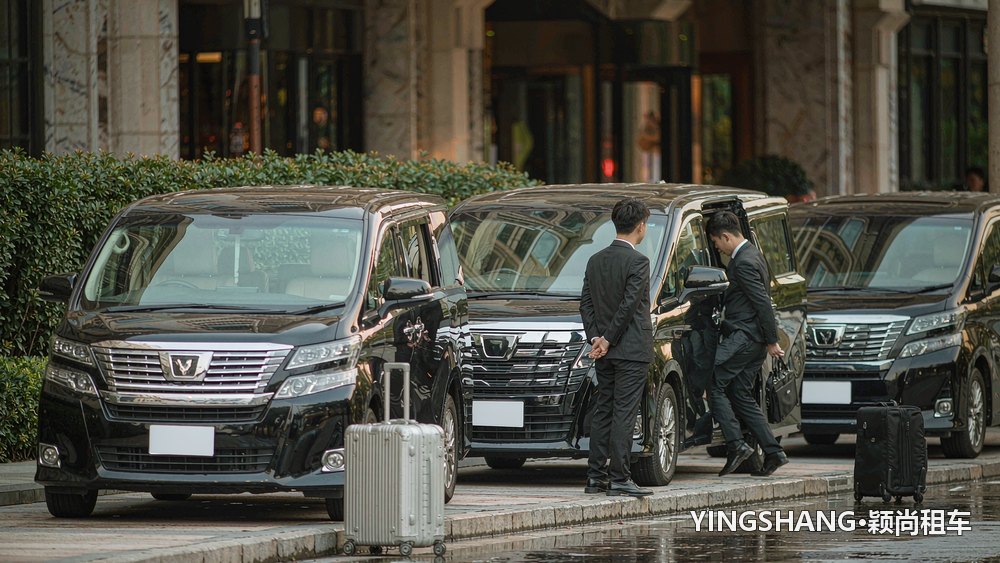
On a dispatch board, the first question is never who needs a car. It is what grade of car the trip needs. On one morning a GL8 may collect three suppliers, a V260 may take a client to a signing, and an Alphard may wait outside a hotel for the chairman. All three are seven-seat vehicles with a driver, and the invoices differ, but the real difference is not price. It is how easily each car can be swapped for another. Fleets do not build a vehicle ladder by reading a price list from bottom to top. They build it by asking which occasion each grade has to hold: which grade absorbs volume, which grade sets the standard for formality, and which grade exists for a few half hours a month. Get this logic wrong and every request collapses into one grade. Ask for the base grade on every trip and client reception loses its floor. Ask for the top grade on every trip and both budget and availability collapse. This article looks at grading from the dispatch side: what each tier protects, which occasion belongs to which tier, what goes wrong when they are mixed up, and a table you can paste into a corporate car policy. Fleet configuration is listed on the corporate vehicle page, with model detail on the Buick GL8, the Mercedes V260 and the Toyota Alphard.
1. The ladder is built on replaceability, not on price
Q1: Why does a fleet need a base tier instead of buying only premium cars?
Because demand is a pyramid, not a flat sheet. In a fleet of 285 self-owned Shanghai-plate vehicles, trips that genuinely require top-tier reception are usually under a tenth of the volume. The rest is supplier pickups, short shuttles inside a campus, conference transfers, late-shift drops and document runs between sites. What these trips care about is arrival, not cabin experience, and what they are sensitive to is whether the car fits into a basement car park, whether the boot takes three large cases, and whether one car can do three runs before lunch. A fleet of only premium cars raises the unit cost and tightens availability, because in peak weeks one premium car has to cover three bookings and nobody can be scheduled. So the ladder is built from volume upward: find the grade with the highest demand density and the lowest replaceability, make that the base; find the grade that has to hold formality, make that the standard; find the grade that appears only in a handful of scenes, make that the peak. Only then does dispatch have room to move.
2. What the GL8 protects: seven seats and a basement ramp
Q2: When is a GL8 enough, and when is upgrading a waste?
Three situations are enough: pickups at working level, where the visitor is an engineer, a buyer or a project contact discussing specifications rather than signing; trips with three people or fewer and modest luggage; and internal shuttles where the car waits at the door for fifteen minutes. Three questions settle it. Who is the visitor, is there a signing or a formal dinner in the programme, and will the car be parked somewhere it is seen, such as a hotel forecourt or a headquarters drop-off. If all three are light, the GL8 is right. It is a length that fits most office basements, the third row is usable, the boot takes three large cases without stacking, and drivers know the vehicle well. Upgrading here buys quiet and a better seat for forty minutes that the passenger may not notice, while the monthly statement certainly will.
3. Where the V-Class sits: turning formality into a standard
Q3: What does the V-Class add, and which occasions call for it?
It adds three things: space, quiet and ceremony. Space means two independent second-row seats with leg rests and an aisle you can walk; five or six passengers still sit properly in the third row. Quiet means engine bay and floor insulation good enough that a normal conversation does not need a raised voice. Ceremony means electric sliding doors, a welcome step and a cabin that reads differently the moment a guest gets in. The occasions follow: a client decision-maker visiting, a signing, an investor roadshow, an overseas guest, and any trip longer than forty minutes where business is discussed in the car. On that last point, quiet matters more than luxury. The difference between the V260 and the V300L is wheelbase. The long version gives a better third row and a deeper boot for five or six passengers with luggage; the short version turns and parks more easily in older basements. Choose by headcount and by the destination car park, not by which is dearer.
4. Where the Alphard sits: half an hour at each end
Q4: When is an Alphard genuinely needed?
For two half hours: the arrival and the send-off. A chairman-level reception, a first visit from a major client, or any moment where the vehicle is part of how the company is seen, at a hotel entrance, a headquarters drop-off or the door of a signing ceremony. In those minutes the stance of the car and the two second-row seats do real work. It is a poor commuter: four usable seats, a third row that needs the second row moved to enter, and a clear drop in comfort with seven aboard. It is also not a long-distance car, being tall and sensitive to crosswinds at speed. The practical answer is grouping rather than blanket upgrading. Put the Alphard on the arrival and the send-off, and run the middle of the day, the site visits and the plant tours, on a V-Class or a GL8 with a support car for people and luggage. That protects the moments that matter without tying up a peak vehicle for a whole day, which matters most in a tight season.
5. Three classic mismatches: too low, too high, wrong job
Q5: What are the three most common mismatches?
Too low, too high and wrong job. Too low: a client decision-maker arrives and a GL8 pulls up. The guest sees the seats first, and the point is not that the car is poor but that the company did not distinguish the occasion, which quietly discounts every preparation made before. Too high: three colleagues on an internal trip take the Alphard, the budget is eaten by single bookings, and the reception that actually needed the car cannot get it, because in peak weeks even 285 vehicles are scheduled, not idled. Wrong job: running an Alphard on a shuttle line turns seven seats into four, requires the second row to be moved at every stop, and adds two minutes per stop, which becomes fifteen minutes across a thirty-person line and reads to staff as a shuttle that is always late. None of these is a question of money. All three are a question of grade and occasion failing to meet.
6. Writing the tiers into policy: one table, three rules
Q6: How do you turn vehicle grades into a policy rather than a request form?
Write the rule as visitor level multiplied by trip type, then add three controls. First, grade is set by the visitor and the occasion, never by the seniority of the person requesting, so a director collecting an engineer still books the base tier and an assistant receiving a client chairman books the standard tier. Second, upgrades need a reason in writing: who is coming, what the occasion is, and why this tier cannot drop, approved one booking at a time and kept for review. Third, when a trip uses several cars, group them: upgrade the lead car only and keep support cars on the base tier. Operationally, keep the table in a shared document with four columns, occasion, tier, matching model and one thing to check before departure, and review upgrade approvals monthly to see how many were real receptions and how many were habit. The purpose is not to police requests. It is to move from booking by feel to booking by occasion, so a new administrator does not have to relearn it. The table is at the end of this article.
| Occasion | Tier | Model in fleet | Check before departure |
|---|---|---|---|
| Supplier and working-level pickups | Base | Buick GL8 (7 seats) | Basement height limit and case count |
| Trips of three or fewer, campus shuttles | Base | GL8 / Denza D9 (7 seats) | Luggage against third-row use |
| Client decision-maker, signing | Standard | Mercedes V260 (7 seats) | Second-row condition and cabin cleaning |
| Five or six plus luggage, long transfer | Standard | Mercedes V300L (7 seats) | Third-row legroom and boot depth |
| Chairman-level, first visit | Peak | Toyota Alphard (7 seats) | Drop-off point and driver briefing |
| Groups of nine or more | Midibus | 9-seat Binter / 11-seat Coaster | Passenger list and gate registration |
YINGSHANG Car Rental Tip:Search YINGSHANG on WeChat or call 133-7002-5039 for blank samples of the three-tier vehicle table and the six-question lease checklist. Buyers in Shanghai are welcome to inspect vehicles at 1468 Laiyin Road, Songjiang, or watch how dispatch boards and monthly statements are filled at the Jiujing Road control centre.
Author: YINGSHANG Editorial Team
Reviewed: · Source: Shanghai Yingshang Car Rental Co., Ltd.
The YINGSHANG Editorial Team is the official content team of Shanghai Yingshang Car Rental, responsible for curating Shanghai charter, chauffeured rental, corporate shuttle and business travel content, and for verifying pricing and reviewing content.
Pricing, vehicle and service details in this article were reviewed and updated by the YINGSHANG Editorial Team on 2026-11-02. Charter prices fluctuate with the market and are subject to the day's quote; call 133-7002-5039 for the latest vehicles and rates.
District Coverage
Corporate shuttle, business car rental and long-term hire in these districts.