2026-11-02 · Minhang lease terms
Minhang Corporate Leases: Xinzhuang Park Terms to Agree
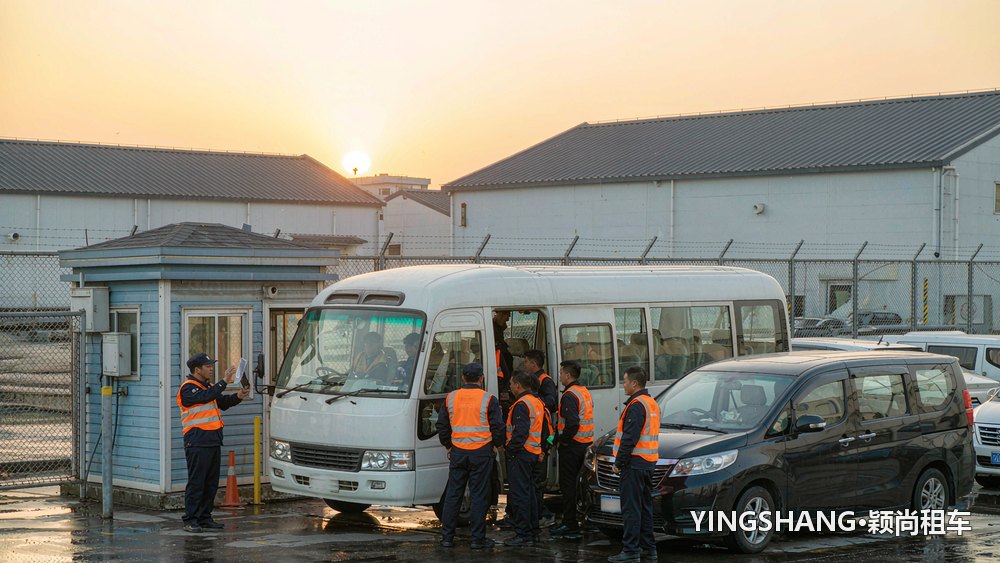
Leasing vehicles in Minhang is two different conversations. North of the district, around the Hongqiao hub, demand is commercial: punctual pickups and a workable drop-off point. South past Xinzhuang, through the industrial park, Zizhu, Maqiao and Pujiang, demand is plant-based: gate registration, parking, shift patterns and an on-site car. The same phrase, monthly lease, means early and late transfers plus occasional visits in an office tower, and a fixed shuttle line plus one on-site vehicle at a plant, with completely different boundaries, billing and reconciliation. Most disputes that surface in month three are not service failures. They come from negotiating headcount and unit cost and leaving four other numbers unsaid: how mileage is counted, what counts as overtime, how fast an extra run can arrive, and what the monthly statement looks like. This article follows a checklist order. Six items, each with the question to ask across the table, the answer you should expect, and the document to keep. District coverage is on the Minhang corporate transport page, park shuttle formats on employee shuttle services, and vehicle and seat options on the fleet page.
1. Read the map first: four zones, four different radii
Q1: Which parts of Minhang suit an on-site car and which suit a fixed line?
Three zones. The first is the southern edge of the Hongqiao hub along Qibao and Xinzhuang, where demand is commercial, visits and business travel dominate, and a car is best provided by the day or the month with attention on punctuality and drop-off. The second is the Xinzhuang industrial park, Zizhu and Maqiao, where plants are concentrated and gates are strict while parking is generous. That pattern suits one fixed shuttle line plus one on-site vehicle, with the on-site car running documents, pickups and errands during the day and folding back into the shuttle line in the evening. The third is Pujiang and Wujing, far from the centre and dependent on metro transfers, where the line has to be designed around interchange, with stops placed no more than eight minutes on foot from residential compounds and metro entrances. The test is not distance. It is whether one vehicle can serve three purposes in one day. If it can, on-site pays. If not, schedule by run.
2. Three base numbers before you negotiate: vehicles, runs, mileage
Q2: How do you size vehicles and runs without over- or under-booking?
Put three numbers on the table. Vehicles: split a week of demand into full-day occupation and single trips, add up the full-day portion for the on-site count, and convert the rest into runs. Runs: a shuttle line is two runs a day, morning in and evening out, becoming three where shifts rotate or overtime is common and four on a two-shift pattern. Size on the fullest day, never on the average, or you will always be one vehicle short. Mileage: work back from last month dispatch sheets or ride-hailing records, divide total kilometres by vehicles, and you have average monthly mileage per car, which decides how the mileage allowance should be set. Runs are the number most often missed, because overtime is occasional and invisible day to day, yet overtime is exactly what breaks the budget in the first quarter. Writing down the maximum runs in a single day is worth far more than writing subject to actual demand.
3. On-site or dispatched drivers: where the money and the liability sit
Q3: On-site versus dispatched drivers: what differs in cost and liability?
An on-site driver and vehicle belong to you for the day. The advantage is immediate departure, familiarity with gate procedures, routes, which entrance to use at which hour and when heavy vehicles block the yard. The cost structure is person plus vehicle by the day, idle time included, and it suits operations with six or more hours of use daily. A dispatched driver is assigned per task. You pay nothing when idle, but urgent requests depend on the schedule that day, and the driver may differ each time, so gate registration, plant routes and loading points are briefed again on every trip. Liability sits in two sentences. For on-site, how is working time defined, does standby count, and from which hour does overtime start. For dispatched, how long is waiting free, and is overtime billed by the half hour or the hour. Without those sentences in the contract, month one ends in two versions of the same event. For plant-based clients we usually recommend one on-site vehicle plus a fixed line, absorbing occasional demand into the on-site car gaps.
4. Mileage and overtime: choose one basis and write it down
Q4: How should mileage and overtime be written into the contract?
Choose one basis and do not mix them. Flat allowance: the monthly rate includes a fixed mileage, for example three thousand kilometres per vehicle, with excess billed per kilometre, which suits a stable shuttle line. Actual usage: billed monthly on real mileage, which suits an on-site car with varied duties but requires evidence, either odometer readings on the dispatch sheet or a photographed dashboard. Day rate: a day includes a set number of hours and kilometres, with excess by the hour, which suits reception work. Overtime needs three sentences: how long waiting is free, which for airport pickups is usually counted from actual landing; whether overtime is billed by the half hour or the full hour; and how a trip crossing midnight is attributed. Late-night airport runs generate most disputes here, because a landing at 23:40 can be booked to either day. Keep two documents, the dispatch sheet and the monthly statement, and make sure the mileage on both agrees.
5. Extra runs and extra passengers: trigger, response time, billing edge
Q5: How do you agree extra runs and extra passengers without argument?
Agree three things: trigger, response time and billing edge. The trigger should be concrete: how many extra passengers on a line justify an additional run, after what hour a run must be arranged, and how statutory holidays and make-up working days are treated. Response time should be a number: how many hours within working hours, how many at night, how many on holidays. If the supplier cannot give numbers, there is no dispatch capability behind the promise. The billing edge should be explicit: is an extra run billed per trip or per hour, are additional passengers charged separately, and does a cross-district run, say Xinzhuang to Pudong, carry a supplement. One detail worth writing in is the cut-off for requesting overtime. Many plants only know at two hours notice that the line will run late, so a contract requiring a day of notice is broken from the first week. Wording such as requests before 16:00 are billed as overtime runs and later requests are accommodated where possible protects both sides without relying on goodwill.
6. Four documents at month end: fix the format at signature
Q6: Which four documents are reconciled monthly, and how do you fix the format at signature?
Four. The dispatch sheet, one per trip, showing plate, driver, start and end times, start and end mileage and the passenger signature. The extra-run confirmation, showing who requested it, at what time, and when the vehicle arrived. The exception log, covering lateness, breakdown, replacement vehicle and complaints, with the resolution. And the monthly statement, listed by vehicle and by day, showing days worked, total mileage, overtime runs, replacement vehicles and any deductions. Attach the statement template to the contract at signature. This matters more than the rate: with a fixed format, each month is a matter of filling numbers, and without one, each month reopens the question of what a line item means. A workable rhythm is statement by the third working day of the following month, confirmation within five days, invoice after confirmation, with statement and invoice amounts matching. Keep the four-part file, contract with amendments, monthly statement, invoice and dispatch sheets, which is also the basis for any later discussion of cost allocation and deductibility, subject to your finance head and the competent tax authority.
| Item | Question to ask across the table | Document to keep |
|---|---|---|
| Vehicles and runs | How many vehicles and runs on the fullest day, and what triggers an extra run? | Demand estimate, run schedule |
| On-site or dispatched | Does standby count as working time, and from which hour is overtime? | Contract clause, roster |
| Mileage basis | How many kilometres are included, how is excess billed, what is the source of truth? | Dispatch sheet readings |
| Overtime and midnight | How long is waiting free, and which day does a midnight trip belong to? | Pickup record, timestamps |
| Response time | Requested before 16:00, how many hours to arrive, holidays included? | Extra-run confirmation |
| Statement format | Can the template be attached to the contract, and when is it issued? | Template annex, statements |
YINGSHANG Car Rental Tip:Search YINGSHANG on WeChat or call 133-7002-5039 for blank samples of the three-tier vehicle table and the six-question lease checklist. Buyers in Shanghai are welcome to inspect vehicles at 1468 Laiyin Road, Songjiang, or watch how dispatch boards and monthly statements are filled at the Jiujing Road control centre.
Author: YINGSHANG Editorial Team
Reviewed: · Source: Shanghai Yingshang Car Rental Co., Ltd.
The YINGSHANG Editorial Team is the official content team of Shanghai Yingshang Car Rental, responsible for curating Shanghai charter, chauffeured rental, corporate shuttle and business travel content, and for verifying pricing and reviewing content.
Pricing, vehicle and service details in this article were reviewed and updated by the YINGSHANG Editorial Team on 2026-11-02. Charter prices fluctuate with the market and are subject to the day's quote; call 133-7002-5039 for the latest vehicles and rates.
District Coverage
Corporate shuttle, business car rental and long-term hire in these districts.