2026-10-02 · FAQ
Should Your Shanghai Business Fleet Go Electric? Suitability, Cost and Charging FAQ
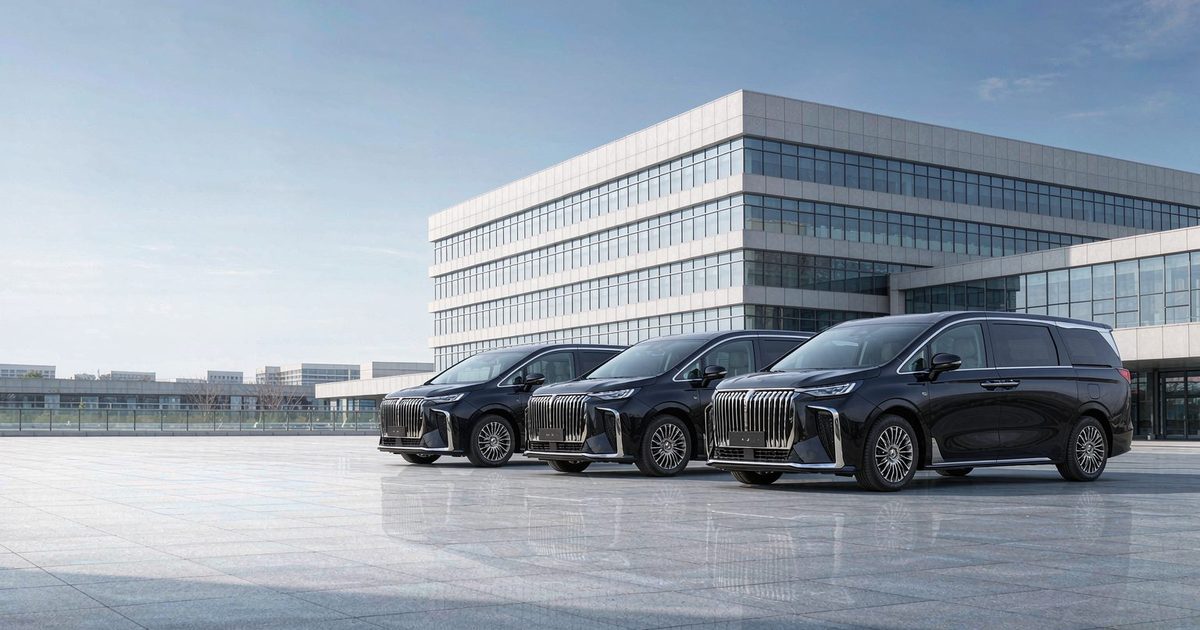
Electrification is the topic no corporate fleet in Shanghai can avoid. The administration team notices a quieter, more composed arrival; finance notices the gap between a charging bill and a fuel bill. What actually decides whether the arrangement runs smoothly, though, is the unglamorous detail: whether your parking can take a charger, where a chauffeur tops up between shifts, and what happens when a trip crosses a provincial border at short notice. Putting an electric executive car on a corporate car list is not a matter of swapping one vehicle — it is a matter of swapping a whole routine of rostering and charging. Nine questions and answers, from suitability to rollout.
1. Deciding Whether It Fits
Q1: Should a Shanghai business switch to electric executive cars? What are the three tests?
Three tests, and they are straightforward. First, the radius: if the day-to-day work is in-city commuting, client hospitality and airport transfers, distance per trip is predictable. Second, charging: whether your own parking can take a charger, or a dependable public charging site sits near the office. Third, the rhythm: fixed routes at fixed times are far easier to charge around than ad-hoc dispatch. Meet two of the three and an electric car usually settles in well. If long inter-province journeys and unpredictable same-day requests dominate, run a mixed petrol and electric fleet first rather than converting everything in one go. Shanghai business car rental offers plenty of choice; the useful first step is measuring your own usage radius, not choosing a model.
Q2: Which journeys suit an electric executive car, and which do not?
Four suit it well. In-city client hospitality, where a quiet, smooth, fume-free cabin is a real advantage. Airport transfers, with fixed one-way distances and a clear charging window on either side. Fixed-route staff commuting and campus shuttles, where both route and timing are stable. And short in-city daily hire or meeting use, where total mileage stays modest. Three do not. Itineraries with several outer-district stops on the same day, where mileage is unpredictable. Inter-province journeys arranged at short notice. And short-term hire with no guaranteed parking. The car is rarely the problem — assigning the wrong job to the wrong vehicle just leaves both sides awkward.
2. Working Out the Cost
Q3: What does an electric executive car cost per day in Shanghai?
On our own fleet, a seven-seat Zeekr 009 with chauffeur is 1,200 yuan per day, including eight hours and 100 kilometres of city driving, with excess distance and hours billed at the contracted rates. The seven-seat Denza D9 sits in the same electric executive class, with availability and rates confirmed per itinerary. A rate includes vehicle use, chauffeur, electricity or fuel, insurance and routine maintenance. It excludes motorway tolls, parking, chauffeur meals at 50 yuan per meal, and out-of-area empty running. One further point: the thing corporate clients dread is a low headline number followed by item-by-item additions. Our per-model pricing is published on the website — no phone-only quotations, no hidden figures — and the fee boundary goes into the contract so budgeting does not depend on guesswork.
Q4: How much cheaper is a monthly contract than daily hire?
Monthly corporate hire is priced by the month and quoted on vehicle class, daily hours required and monthly mileage, landing 20 to 30 percent below daily rates and normally including chauffeur, electricity or fuel, insurance and routine maintenance. For reference, a petrol Buick GL8 monthly contract runs 15,000 to 18,000 yuan per month; electric executive cars are quoted on the same basis. One clause deserves more attention than the rest: who pays for electricity, and how it is settled. Where the client charges at their own parking, the client normally bears the power cost and the operator provides the service; where public chargers are used, the cost usually folds into the hire. Leave that vague and the month-end reconciliation turns into an argument that has nothing to do with the car.
3. Charging and Driver Rostering
Q5: How should charging be organised so it never delays a journey?
Three patterns dominate. Charge at your own parking overnight on off-peak tariffs, so the car leaves full and cheap. Charge at destination, with the chauffeur topping up at a mall, hotel or campus charger while waiting on a meeting. Or let the operator handle it, with charging scheduled at shift handover so that it is part of the roster rather than the driver’s private errand. The organising principle is singular: charge at night, drive by day, and write charging into the chauffeur roster. Any arrangement that depends on a driver finding a charger on the fly will fail on a busy morning sooner or later. Operators who manage this reliably tend to run a permanent dispatch centre rather than pooling ad-hoc vehicles.
Q6: Can an electric executive car handle inter-province journeys?
Yes, with a mileage plan. The robust approach is a mixed fleet: electric cars cover in-city commuting, hospitality and airport work, long inter-province journeys go to petrol vehicles, or the route is planned around identified charging stops with charging time built into the schedule. One useful rule of thumb from long-distance chauffeured work: if a one-way leg exceeds half the car’s realistic range, do not compress the itinerary. Better to allow an extra hour up front than to have a client waiting at a service area for a charge.
4. Hospitality and Chauffeur Detail
Q7: How does an electric car feel different for client hospitality?
Three differences are immediate: quiet, smooth, and no smell of fuel. Road noise is markedly lower, there is no gear-change hesitation from a standstill, and the cabin carries none of the odour a petrol car does — all genuine advantages when receiving guests. Two things for the chauffeur to watch. Pre-condition the cabin, cooling it ten to fifteen minutes ahead in summer and warming it in winter so the client steps into a comfortable temperature; idling the air conditioning carries no fuel penalty, which is an electric advantage. And drive more gently, because instant torque punishes a heavy right foot, and a lurching chauffeur undoes an otherwise excellent impression. Put both into the chauffeur service standard and the difference in experience becomes obvious.
5. Verifying the Fleet and Rolling Out
Q8: How do you tell whether the electric cars are owned or subcontracted?
Three checks. Whether the vehicle registration stands in the rental company’s own name: our 285 Shanghai-plated vehicles are registered to the company, with no attached third-party cars and no borrowed private vehicles, and both vehicles and chauffeurs managed directly. Whether the promised model and chauffeur are dedicated, or can be swapped for something else in peak season. And whether last-minute extra vehicles are drawn from the operator’s own dispatch centre or sourced from a broker. Swapping vehicles at peak and adding surcharges at short notice are precisely the failures a broker-sourced fleet cannot cure. The difference between Shanghai car rental companies often shows up not on the quotation but at the moment the car is dispatched.
Q9: What is a sensible way to electrify a corporate fleet step by step?
Three steps, each leaving data behind. Begin with fixed-route short commuting and campus shuttles, where distances and timings are predictable and charging arrangements are easiest to validate. Then replace the in-city hospitality and airport fleet, comparing client feedback and running costs over one to two months. Only then consider inter-province work, or bridge it with a mixed fleet. After each step, keep a month of figures: total mileage, charging events, cost per kilometre, last-minute substitutions, and feedback from clients and staff. Decide the next step on that data rather than replacing everything at once. A fleet with business cars averaging 1.1 years old and salaried chauffeurs averaging over eight years of experience has an easier time of it, because stable vehicles and stable service standards leave fewer variables to manage. Call 133-7002-5039 (Mr. Liu, also on WeChat) or browse per-model pricing at www.vvipzuche.com; the fleet can be inspected at No. 1468 Laiyin Road, Songjiang District. YINGSHANG Car Rental has operated locally since 2012 — fourteen years, 285 directly-operated Shanghai-plated vehicles and 500-plus corporate clients — on corporate-account settlement with transparent pricing.
YINGSHANG Car Rental Tip: Three numbers decide whether an electric executive car fits — one-way distance, charging conditions and days of use per month. Work those out before choosing a model. YINGSHANG runs 285 directly-operated Shanghai-plated vehicles with no attached or borrowed cars, business cars averaging 1.1 years old and salaried chauffeurs averaging over eight years of experience, on corporate-account settlement and published per-model pricing. Call 133-7002-5039 to discuss electric models and monthly contract options.
Author: YINGSHANG Editorial Team
Reviewed: · Source: Shanghai Yingshang Car Rental Co., Ltd.
The YINGSHANG Editorial Team is the official content team of Shanghai Yingshang Car Rental, responsible for curating Shanghai charter, chauffeured rental, corporate shuttle and business travel content, and for verifying pricing and reviewing content.
Pricing, vehicle and service details in this article were reviewed and updated by the YINGSHANG Editorial Team on 2026-10-02. Charter prices fluctuate with the market and are subject to the day's quote; call 133-7002-5039 for the latest vehicles and rates.
District Coverage
Corporate shuttle, business car rental and long-term hire in these districts.