2026-10-05 · Decision Guide
Should Your Shanghai Company Buy Vehicles or Outsource Corporate Transport? Holding Costs, Management and Flexibility FAQ
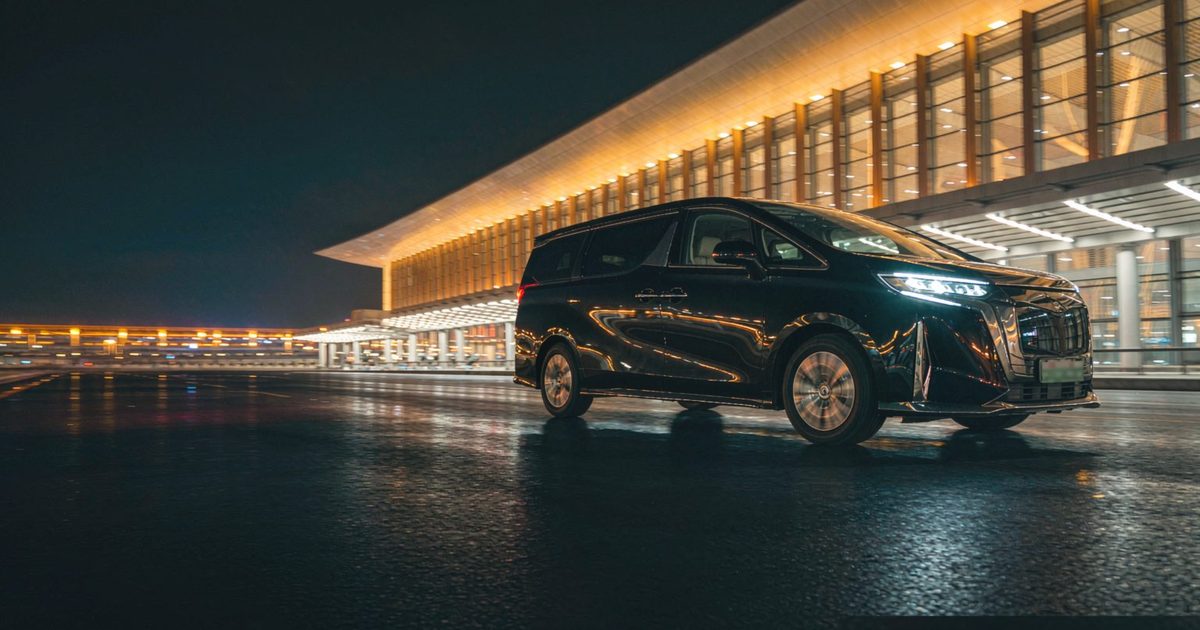
Once transport volume reaches a certain scale, almost every company meets the same question: should we buy our own vehicles? Administration likes the simplicity of outsourcing, finance likes assets on the balance sheet, and the business units only care whether the car arrives on time. There is no universal answer, but there is a reliable method: understand the cost structure of each mode, map your own demand profile, and then decide — own, outsource, or combine. Ten questions and answers on the buy-versus-outsource decision for corporate transport in Shanghai, covering cost, fit, management and process. This covers general frameworks only; treatment of assets and tax belongs with your finance lead and the competent authority.
1. The Cost Structures, Side by Side
Q1: When deciding between buying and outsourcing, what comes first?
Not the unit price. Two things first. The cost structure: ownership is a fixed-cost model — the money goes out monthly whether or not the vehicle runs — while outsourcing converts fixed cost into a variable, per-trip or per-month cost. Then the demand profile: how stable the frequency is, whether routes repeat, how sharply demand swings, and whether ad-hoc or cross-region trips occur. Stable, high-volume, repeatable demand is what lets ownership pay off; volatile, multi-purpose demand is what makes outsourcing valuable. Draw the demand curve first, then choose the model. A common mistake is borrowing another company's answer for a demand profile that looks nothing like theirs.
Q2: Which holding costs are most often missed?
Six recur. Capital tied up in the purchase and its depreciation — the money leaves early and its cost often has no owner. Insurance, inspections and maintenance scattered across the year, individually small but collectively large. Drivers as permanent headcount — salary, social contributions and management — a major recurring block in the ownership model. Parking, charging or fuel commitments that run all year. Resale uncertainty: what a vehicle fetches three years later is a guess until it happens. And replacement logistics as the fleet ages. Run a full total-cost-of-ownership exercise with all six included and the all-in figure usually lands well above the purchase price — and the gap is mostly people and management, not the car.
2. Which Pattern Fits Which Model
Q3: When does owning make sense?
Three patterns. High-frequency routes that barely change — a staff shuttle running two fixed loops every day, where utilisation is high enough to spread the fixed cost. Specialist or brand-customised vehicles the rental market cannot match. And work requiring continuity of the same driver and vehicle over a long term on one route or client. The test is not whether buying is good in the abstract but utilisation: a vehicle used every day justifies itself; one parked four days a week burns fixed cost while stationary. Write the expected utilisation rate into the decision document — it is the first assumption to be tested.
Q4: When is outsourcing the better fit?
When demand is volatile, purposes are diverse, or needs are temporary and cross-regional. Short peaks around trade fairs, annual meetings or audit season — owning for one month of rush means paying for eleven of idling. Use cases spanning client hospitality, staff commuting, air travel connections and intercity trips, each needing a different vehicle class that a small owned fleet cannot cover. Project work in other cities with a defined start and end. Outsourcing is essentially buying flexibility: you stop paying fixed cost on low-utilisation vehicles and let an operator with its own fleet absorb the swings. A useful test: if this demand halved tomorrow, what would you do with the owned cars? Under outsourcing, the question does not exist.
3. Hybrids and Making Outsourcing Work
Q5: Can the two models be combined?
Yes — a hybrid is the steady state for many mid-sized companies. Two common shapes. Core ownership plus peak outsourcing: keep the highest-utilisation fixed routes in-house and hand the volatile share to an external operator. Or full outsourcing under a framework agreement: no owned vehicles at all, with an annual framework locking pricing, vehicle guarantees and response times, turning flexibility into something predictable. The choice depends on management bandwidth, because owning means running vehicles, drivers and maintenance yourself, and companies without a person responsible for that routinely underestimate the cost. Assess honestly whether anyone can run a small fleet; if not, full outsourcing under a serious framework agreement usually beats a reluctant purchase.
Q6: How do you verify an operator really runs its own fleet?
Three verifiable points. Whether the vehicles are genuinely owned: ask for registration documents showing vehicles registered to the operator itself rather than attached or spot-hired — attached fleets tend to substitute vehicles and add surcharges at peak, the most common failure mode in outsourced transport. Whether drivers are full-time: confirm an employment relationship rather than gig dispatching, since full-time drivers mean training, assessment and accountability all have an owner. And whether there is local dispatch capability: fixed premises and a dispatch centre mean substitutions and contingencies have physical backing. In the Shanghai corporate market, an operator with 285 company-owned Shanghai-plated vehicles, full-time drivers and a dispatch centre in Songjiang manages vehicles and chauffeurs directly, does not depend on third-party supply at peak — and can commit to that in contract terms.
Q7: What should a framework agreement lock down?
At least five things. The pricing basis: what is included and excluded, with unit rates for excess kilometres, extra hours, driver meals, tolls and parking spelled out line by line — no vague "to be negotiated". Vehicle and driver commitments: the class or model, whether the same chauffeur is guaranteed, and substitution rules with a fallback. Response times: normal booking lead times and the path for urgent requests. Settlement and invoicing: monthly reconciliation dates, payment terms, invoice type and billed items, settled through the company account. And exit and substitution mechanics: remedies and liability when the operator cannot perform. The value of a framework agreement is that it removes the negotiation cost from every individual trip — effort once, a smooth year after.
4. Idle Cost and the Decision Process
Q8: How do you estimate the idle cost of owned vehicles?
A simple method: work out each vehicle's monthly fixed cost — depreciation, insurance and inspection allocations, driver cost, parking and energy — then multiply by expected utilisation to get an effective cost per trip. Lower utilisation means a higher effective cost per journey. When comparing with outsourced quotes, match the bases: the quote already includes vehicle, driver, energy and insurance, so the owned side must be calculated on the same full basis — comparing fuel and driver salary alone will flatter ownership badly. For a multi-vehicle fleet, expect overall utilisation below single-vehicle figures, because someone's vehicle is always waiting. If effective cost clearly exceeds the outsourced rate, the remaining case for buying rests on hard necessity — a special vehicle the market cannot supply.
Q9: Should the decision be phased?
Three steps. First, run outsourced for three to six months: the demand itself needs an observation period, because real frequency, routes and peaks rarely match the forecast; and the usage log accumulated while outsourcing — purpose, mileage, time slots, spend — is the more reliable decision data available, closer to your reality than any market study. Second, review the log: utilisation, cost per trip, response reliability. Third, commit in stages: if ownership is justified, start with one or two vehicles on core routes and review after a full quarter before expanding. Companies that buy first and look for demand afterwards tend to be planning against imagined volumes. Phasing costs little and reverses easily.
Q10: Which indicators should the annual review track?
Five are enough. Total transport cost and average cost per trip, year on year, to avoid the scale illusion of looking only at totals. Utilisation — of owned vehicles, or order density on the outsourced side. Response reliability: the share of pickups arriving on time. Exception records: substitutions, late arrivals and complaints, with how each was handled. And the share of hidden charges — excess kilometres, last-minute additions, waiting fees — in total cost. The point is not only saving money but testing whether the original model choice still holds: businesses change, demand changes, and a model that fitted last year may not fit this year. Walk the five indicators once a year and adjust the model accordingly. For a cost comparison or a proposal, call 133-7002-5039.
YINGSHANG Car Rental Tip: There is no single answer to buy-versus-outsource, but there is a reliable process — map the demand curve, run the full cost exercise, validate assumptions with an outsourcing log, phase the decision, review annually. For an outsourcing partner, these facts are verifiable: YINGSHANG has spent fourteen years in Shanghai, founded in 2012, with 285 company-owned Shanghai-plated vehicles, business vehicles averaging 1.1 years old, a full-time chauffeur team averaging over eight years of driving experience, vehicles and chauffeurs managed directly with no attached third-party cars, company account settlement with proper invoicing, and more than 500 corporate customers. Business address: 1468 Laiyin Road, Songjiang District, Shanghai; dispatch centre: Room 207, Building 3, 655 Jiujing Road, Songjiang District; website www.vvipzuche.com; open Monday to Sunday 08:00–22:00.
Author: YINGSHANG Editorial Team
Reviewed: · Source: Shanghai Yingshang Car Rental Co., Ltd.
The YINGSHANG Editorial Team is the official content team of Shanghai Yingshang Car Rental, responsible for curating Shanghai charter, chauffeured rental, corporate shuttle and business travel content, and for verifying pricing and reviewing content.
Pricing, vehicle and service details in this article were reviewed and updated by the YINGSHANG Editorial Team on 2026-10-05. Charter prices fluctuate with the market and are subject to the day's quote; call 133-7002-5039 for the latest vehicles and rates.
District Coverage
Corporate shuttle, business car rental and long-term hire in these districts.