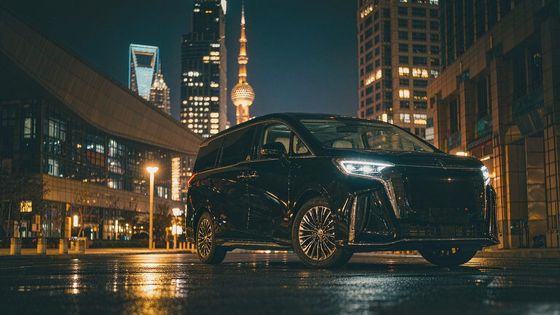
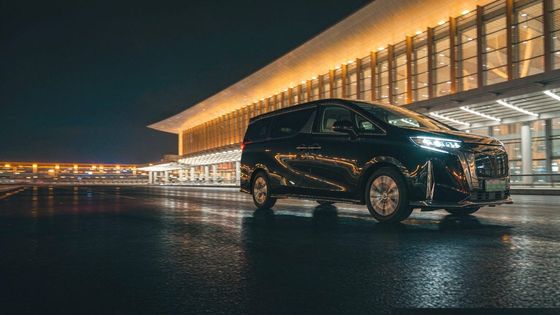
7-Seater Business Van Commute
Executive Commute Vans · Small Team Pick-Ups · Airport & Rail Transfers · Monthly Van Contracts
7-Seater Business Van Commute: When a Van Beats a Coach
Commuting transport is not always a case of “the more seats the better”. Where a fixed route carries only five or six people, or where the riders are managers who need their own space, sending a 45-seat coach is poor value: the seats run empty, access to narrow lanes and underground car parks is restricted, and the fixed cost of the coach is spread across those few passengers anyway.
A 7-seater business van commute suits routes with three characteristics: small numbers — four to six riders per trip; scattered timings — not one rigid clock-in point but staggered arrivals or flexible finish times; and a need for consistency — the same vehicle and chauffeur, a quiet and private ride that runs to time. This pattern is common for executive commutes, expatriate staff transfers, project teams on site, and late-night overtime returns.
YINGSHANG Car Rental provides 7-seater business van commute and monthly van transfer services for companies in Shanghai. Vehicles are self-owned Shanghai-plate business MPVs with full-time chauffeurs, routed around your pick-up points, time windows and rider mix, with monthly passenger and cost statements.
Executive Commute Van: One Seat Each, Fixed Chauffeur, Flexible Departure
The main difference between an executive commute van and a general staff shuttle is certainty. Fewer people ride, but the demand for punctuality, privacy and consistency is higher: the same chauffeur, the same vehicle, waiting at the same pick-up point every day — no hailing from the kerb and no sharing with strangers.
In practice this is a fixed return trip between home and office, or between an agreed meeting point and the office, once each way. Departure times can shift slightly to fit that day’s meeting schedule rather than being tied to one shared timetable. Where the vehicle remains on contract through the day, it can also take on ad-hoc business trips and guest transfers, lifting utilisation.
Some companies fold the executive commute and everyday business travel into a single monthly arrangement: one 7-seater van with one dedicated chauffeur, covering the morning and evening commute as well as airport transfers and meeting travel during the day. One vehicle doing several jobs is easier to coordinate than dealing with two separate suppliers, and removes the uncertainty of calling a car at short notice.
Small Team Pick-Ups: Routing and Timetabling for 5-6 Riders
The core problem with small-team commuting is scattered origins combined with low numbers. Five or six people may live in four or five different directions, so copying a coach’s fixed-route approach can turn one leg into over an hour — hurting both the ride and the punctuality.
Three patterns work better in practice:
- Single meeting point. Set a few fixed pick-up points, have staff make their own way there, then run one vehicle to the office. The simplest route, and the steadiest on punctuality.
- Zone pairing. Split riders into two or three directional zones, one vehicle per zone, linking the four to six people travelling the same way.
- Hub-to-office link. Staff travel to the nearest metro hub on their own, and a van covers the hub-to-office leg — useful where the office sits far from a station.
On frequency, small-team commutes usually run two trips a day, out in the morning and back in the evening, with a late run added for teams that work overtime. Because numbers are low, the vehicle can move between 7 and 9 seats without changing the arrangement, and adding one or two riders does not force a vehicle swap — far more flexibility than a coach.
Airport and Rail Transfers: Covering Early Flights and Late Trains
For companies that travel often, the early flight and the late train are the two hardest legs to arrange. Public transport runs at its thinnest in those hours, and taxis carry the risk of not turning up at all — and a missed connection can unsettle a whole itinerary.
A 7-seater van handles this kind of transfer well: enough seats for a group of colleagues travelling together with their luggage (the third row folded down takes several 28-inch cases), a private cabin, a regular chauffeur, and more control over journey time.
The usual approach is to work backwards from the flight or train time and set the pick-up accordingly, with the van leaving from the office or from staff homes straight to Pudong or Hongqiao airport, or to Hongqiao and Shanghai railway stations. Where several groups travel the same day, transfers can be combined into shared time windows to cut empty running.
These transfers often sit inside the same contract as the commute: commuting morning and evening on working days, airport and station transfers in between. One vehicle covering several duties makes it easier to guarantee availability than booking each trip separately.
Vehicle Options: From the Buick GL8 to the Toyota Alphard
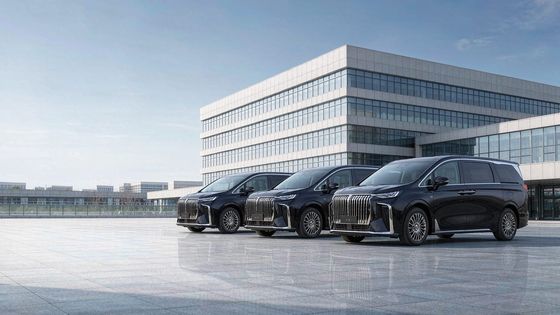
Within the 7-seater bracket there is more than one model available, each with a different emphasis. These are the common choices and where each fits:
| Model | Seats | Type | Where it fits |
|---|---|---|---|
| Buick GL8 | 7 | Business MPV | Routine executive commuting and small-team transfers; balanced specification |
| Mercedes-Benz V260 | 7 | Luxury MPV | Guest reception and commuting combined; individual second-row seats |
| Mercedes-Benz V300L | 7 | Luxury MPV | Longer commutes; a larger rear cabin |
| Toyota Alphard | 7 | Luxury MPV | Important client reception; dedicated executive use |
| ZEEKR 009 | 7 | Electric MPV | City commuting; quiet cabin and comfortable ride |
| Denza D9 | 7 | New-energy MPV | Daily commuting; a balance of running cost and space |
There is no need to step straight to the highest tier. A commute is high-frequency everyday use, so the model should follow the questions that matter: does the rider count stay stable over time, is there a reception need, and does the route face any traffic restrictions. City routes, for instance, can lean towards an electric model, while longer cross-district routes suit a vehicle with greater range.
What Drives the Cost of a Van Commute Contract
Van commute costs are normally built from these parts:
- Vehicle use and depreciation — priced by model tier; a higher tier carries a higher unit rate.
- Chauffeur cost — wages, social insurance and rostering; the cost structure of a full-time chauffeur differs from an ad-hoc driver.
- Route distance and duration — one-way kilometres, trips per day, whether the route crosses districts, and any expressway tolls.
- Running hours — peak-hour occupation, night overtime, and whether weekend or public-holiday running is charged separately.
- Add-ons — parking, ad-hoc extra vehicles, and how kilometres beyond the agreed allowance are priced.
It is worth setting all five out line by line in the contract, in particular how ad-hoc extra vehicles are charged and how excess kilometres are counted — these two are the usual source of disagreement when the monthly statement arrives. Whether the rate includes tax, and what kind of invoice is issued, should also be settled before signing so that finance can book it cleanly.
Van commute contracts are not normally priced per head. They are charged as a package of vehicle, chauffeur and route, which suits monthly settlement. Once the company sets out rider numbers, pick-up distribution and time windows, the operator can give a cost breakdown.
Building a Van Commute Programme: Five Steps
Requirements review
Rider numbers, pick-up distribution, working hours and whether overtime is included.
Route design
Wrap the route around zones or meeting points, and size the vehicle to the one-way distance.
Vehicle and quote
Confirm the model and chauffeur arrangement, with a cost breakdown and monthly rate.
Trial run
Run for one to two weeks, watch punctuality and ride quality, then adjust times and stops.
Steady state
Fix the vehicle and chauffeur, with monthly passenger and cost statements.
Small-team commutes tend to change more often than coach shuttles: staff join and leave, offices move, and overtime patterns shift, all of which affect the route. It is worth keeping a clause in the contract allowing stops and time windows to be adjusted with a set number of days’ notice, so that each change does not turn into a fresh round of negotiation.
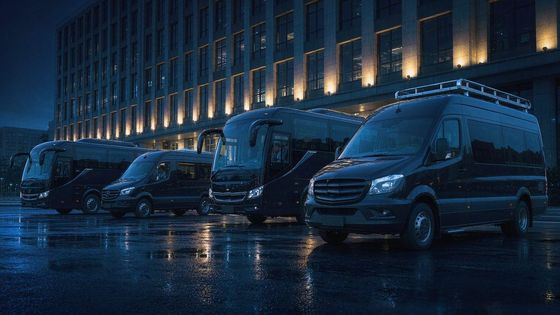
Where a company runs both coach shuttles and van commutes (production on coaches, management and R&D on vans, for example), it is better to have one operator schedule both. Vehicles can then back each other up, giving more room to manoeuvre when overtime or workshop time comes up.
Why Companies Work with YINGSHANG
Own fleet
285 self-owned Shanghai-plate vehicles, with a full range of 7-seat business MPVs. No sub-contracting, no borrowed cars.
Routed and rostered
Routes built around your pick-up points and time windows, so even a small team runs to time and rides comfortably.
Fixed chauffeurs
Full-time chauffeurs averaging eight years’ experience, matched to a regular vehicle and familiar with the route and peak traffic.
Corporate settlement
Monthly passenger and cost statements, formal invoices and bank transfer, straightforward for company accounting.
Discuss a van commute All corporate shuttles
Frequently Asked Questions
How large does a company need to be for a 7-seater van commute?
Total headcount is not the measure — what matters is how many people need to travel the same way at the same time. For four to six riders per trip, or for managers who need their own space, a 7-seater van is usually a better fit than a coach. Where numbers are smaller still, a 9-seat business model can be used instead.
Can an executive commute van and a staff shuttle be arranged together?
Yes, and it is better to place both in one programme. With management and R&D on vans and production on coaches, one dispatcher manages both vehicle groups, and they can cover for each other during overtime or workshop time — steadier than dealing with two separate suppliers.
Does the van come with a chauffeur, or can we drive ourselves?
The service is provided with a chauffeur: the vehicle comes together with a full-time driver. This protects continuity and punctuality on the commute, and removes the need for the company to manage drivers, inspections and insurance itself.
Can we add a vehicle at short notice for overtime or an early flight?
Yes. Ad-hoc use is charged per trip or by actual distance travelled. It is worth setting out the notice period and pricing method in the contract so the monthly statement is straightforward. For early flights, confirm the flight and pick-up time a day ahead so that the vehicle can be scheduled.
Can the van commute be settled monthly?
Yes. The usual arrangement is a monthly all-in rate covering the vehicle, the chauffeur and running within the agreed route. Trips beyond the agreed distance, or ad-hoc overtime, are charged separately and itemised in the monthly statement.
Can the route be adjusted later?
Yes. Staff changes, office moves and shifts in overtime patterns all affect the route. Keep a clause allowing stops and time windows to be adjusted with a set number of days’ notice; during the trial period the route can also be tuned against real data before it is fixed long term.
Related Shuttle Services
- All Corporate Shuttles: employee commutes, overtime rides, cost structure and vehicle sizing.
- Business Park Shuttle: metro last-mile loops, industrial park routes and lunchtime runs.
- Factory Commuter Shuttle: shift handover timing, cross-district routes and 45-53 seat coach hire.
Related Reading
More articles →