📅 2026-11-03 · Chauffeur Dining Arrangement
Meals and Rest for Chauffeurs on Corporate Assignments: Three Ways to Handle On-Road Dining
When a chauffeured assignment is negotiated, the admin checks the vehicle class, the route and the terms, but nobody asks one question: how will the driver eat three meals? The result is two familiar scenes — a driver pushing through hunger until the assignment ends and the service slips, or an improvised meal stop that earns a parking ticket. Dining and rest are not welfare; they are service standards, deciding whether the driver still has patience to wait at three in the afternoon and whether the evening return is fatigued. This article unpacks the topic in Q&A form: three ways to handle dining, a working-hours boundary, and a table you can copy straight into the dispatch sheet. See corporate shuttle and chauffeured service for the service models, and business vehicle fleet and driver staffing for the fleet overview.
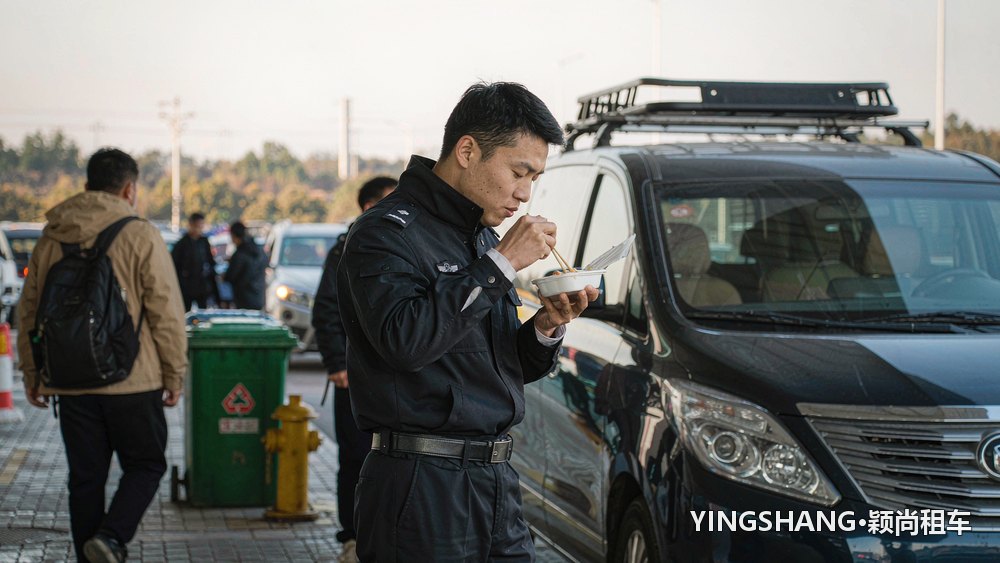
1. Why dining becomes a dispute
Q1: Whose time is the driver’s meal?
It belongs to the assignment, but only if it is written down. On paper, the gaps between tasks belong to the driver; in reality, on a back-to-back itinerary a driver will not bring up meals — it feels like a service complaint. The fix is not on the road but on the dispatch sheet: make dining a fixed field, listed alongside pick-up point and return time. Whether an employer’s transport policy has this line is a litmus test of maturity: once the policy names the driver’s meal, the driver dares to park legally and eat for twenty minutes at noon instead of eating a bun while driving.
2. Option one: the packed meal
Q2: How does the driver eat on a tight schedule?
On days when the nodes are tight, a packed meal plus one short stop at a service area or legal parking spot is the steadiest method: the admin prepares a simple meal in an insulated bag, and the driver parks properly for 15 to 20 minutes between legs. Settle the expense basis in advance — the employer provides meals and reimburses as incurred, or the driver self-provides against a per-meal allowance; choose one, do not renegotiate on the spot. This suits airport runs and intercity sprints: the driver seemingly loses twenty minutes, but the afternoon and evening gain a full stretch of stable service — the arithmetic works.
3. Option two: staggered rotation
Q3: May the driver eat with the passengers?
On reception assignments, drivers do not sit at the guests’ table — a general industry practice and a matter of discipline: during meal windows the driver dines separately and minds the vehicle. Multi-vehicle receptions need one step more — eight vehicles, sixteen drivers, a two-hour guest luncheon: if all drivers go eat, who watches eight vans? Rotate by group: half the drivers stay vehicle-side per group, thirty minutes per shift, phones live in the group chat. The rotation table is drawn up by the dispatcher or coordinator into the reception handbook; if that page is missing, the messiest hour of the reception day is lunch.
4. Option three: scheduled dining stops
Q4: How are meals handled on a full-day assignment?
For full-day accompaniment and factory visits, turn meals into a timetable: two windows at noon and evening of 30 to 40 minutes each, with the dispatcher picking service areas, malls or park canteens with legal parking along the route, written as two columns — dining window and location — attached to the dispatch sheet for driver and admin alike. Scheduled dining is predictable: travellers know where the driver stops and for how long, and the driver need not improvise. When the route changes, the windows move with it, synced by the admin in the group — never leaving it to the driver’s discretion.
5. The rest and working-hours boundary
Q5: How is a driver’s rest time defined?
Three lines: first, four hours of continuous driving requires a rest — a safety baseline no assignment sheet may breach; second, waiting is not rest — a driver standing by outside a venue for four hours has not left work mode, and that time does not offset continuous driving; third, late-night assignments and returns — for tasks ending after 22:00, set the return-lodging basis in advance, whether the driver drives back that night or lodges nearby, and who pays, in the contract annex. Together with dining, these three lines form the human half of a chauffeur service standard; everyone writes the vehicle half, the human half is usually blank — and complaints grow precisely from the blanks.
6. Quick reference table
Copy this table into the dispatch sheet and the choice makes itself:
| Method | Best for | Duration and basis | Where it is written |
|---|---|---|---|
| Packed meal | Airport runs, intercity sprints | 15-20 min legal stop; reimbursement or per-meal allowance | Dispatch sheet dining field + expense basis |
| Staggered rotation | Multi-vehicle receptions, guest luncheons | Half stay vehicle-side; 30-min shifts | Reception handbook rotation table |
| Scheduled stops | Full-day accompaniment, factory visits | 30-40 min at noon and evening, locations fixed ahead | Dispatch sheet timetable |
💡 YINGSHANG note: For blank templates of the chauffeur service standard and the dispatch-sheet dining field, call 133-7002-5039, or visit the dispatch centre at Room 207, Building 3, 659 Jiujing Road, to see rosters and assignment sheets in practice. The fleet runs 285 self-operated Shanghai-plated vehicles; all drivers are full-time employees with 8+ years of experience; registration certificates are held in the company’s name, insurance policies under the company title, and corporate settlement is supported.