📅 2026-11-04 · Accident Timeline
Who Pays First After a Crash in a Corporate Vehicle Lease?
The call after a crash usually reaches the admin, not the boss. The first sentence is “the vehicle has been hit, what now”, and the second is “how much will it cost”. Most corporate transport policies cover dispatch and expenses but never say who pays first on the day — so the driver fronts the tow, the supplier waits for approval, claim paperwork goes back and forth three times, and a small bumper scrape turns into a fortnight of cash-flow argument. This article sets out a timeline: three actions in the first thirty minutes, reporting within 48 hours, a replacement vehicle at T+1, assessment and repair from T+3 to T+7, and a three-way reconciliation at closing. See corporate car rental services for the service model and business vehicle fleet for classes and seating.
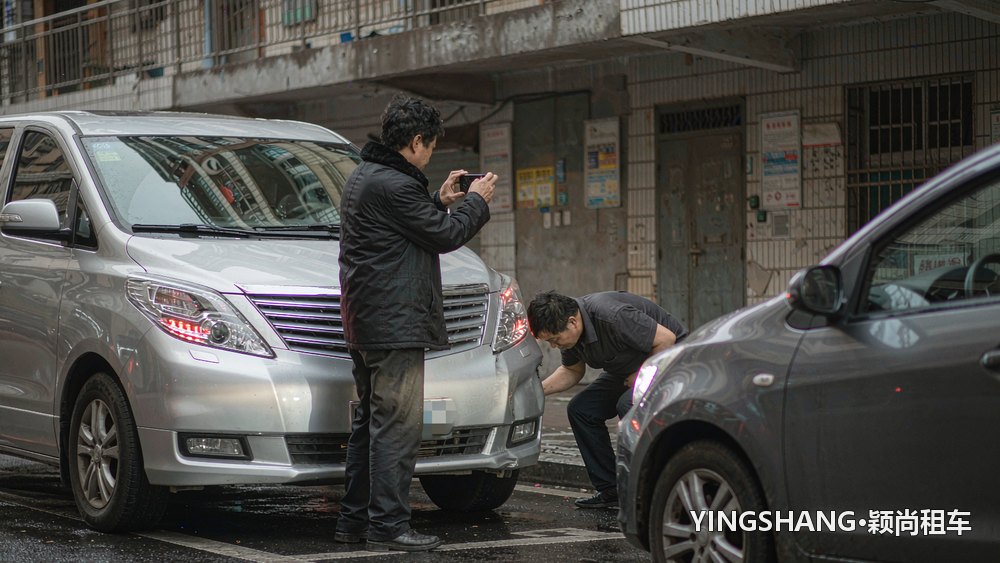
1. T+0 to 30 minutes: people and evidence before money
Q1: What should you do in the first half hour?
One order only: people, scene, report. If anyone is injured, call the ambulance and police first and do not argue liability at the roadside; if nobody is hurt, switch on the hazard lights, place the warning triangle 50 to 100 metres behind the vehicle, and take five photographs: the full front of the vehicle, a close-up of the impact point, both plates, the road markings and signals, and the other driver’s licence and registration. Then call the dispatch desk immediately — do not promise any amount on the spot. The impulse to settle money first is what admins most need to resist in that half hour: any figure agreed before liability is decided usually has to be torn up later.
2. T+0 to 48 hours: reporting is a hard deadline
Q2: How soon must the insurer be notified?
Most commercial motor policies require prompt notification, and practice is to file the first report within 48 hours; late reporting can affect the assessment or trigger requests for extra explanation. Have four facts ready: plate number, time and place, whether anyone was injured, whether the police attended. Drivers often skip this step believing a small scrape is cheaper to fix quietly — then two months later an audit finds a repair with no report, no claim and no clear liability. Add one line to your policy: any damage, however small, is reported before any repair is authorised.
3. T+0 to T+1: who fronts the roadside cost depends on the invoice
Q3: Who pays for towing and roadside costs?
Towing, storage and clearance are usually fronted by the driver or the supplier and then included in the claim. What decides whether the money comes back is not who paid but whose name is on the invoice: the company’s full name or the supplier’s name enters the claim and corporate settlement; a driver’s personal name usually does not. Give admins one action-level rule — before paying anything at the scene, ask whose name goes on the invoice. That single question saves two weeks of re-issuing receipts.
4. T+1 to T+7: who fronts the repair is one clause in the contract
Q4: Who advances the repair cost?
It depends on whether the contract says the supplier repairs in advance and claims later, or the client pays first and claims back. Most corporate leases use the former: the supplier fronts the repair and handles the claim, and the client bears only the deductible and items outside cover, so cash flow is unaffected. When signing, pin down four points: the cap on advance repairs, who accompanies the assessment, who nominates the workshop (dealer or approved shop), and the settlement cycle. If these four are vague, finance has to approve an emergency payment on the day of the crash and the annual budget drifts. A supplier’s maturity shows in whether it can name the person accompanying the assessment on the same day.
5. T+7 to T+15: what insurance leaves uncovered, and closing the file
Q5: Who bears the part insurance does not cover?
Start with the order of payment: compulsory third-party insurance pays third-party injury and property first, commercial third-party cover takes the excess, own damage is met by the motor damage policy, and occupants by passenger liability cover. Four gaps are typical: the deductible, tyres and glass damaged on their own, loss while the vehicle is off the road, and disputes caused by late reporting. What a company should negotiate is not “full cover” but a contract annex naming who bears each of these four. At closing, reconcile three figures — repair invoice, assessment sheet, claims calculation — and record in writing who bears any difference. Five documents close the file: the police report or simplified accident form, the assessment sheet, the repair invoice, the claims calculation, and the replacement-vehicle handover.
6. The replacement vehicle: arrange it before the repair ends
Q6: How is a vehicle replaced, and when is the file closed?
Write a deadline, not “as soon as possible”: a replacement in the same seating class within 24 hours, the same model within 48 hours — that is a service term you can put in the contract. Billing during replacement has two bases: a pro-rata reduction, or the replacement’s own class rate; choose one in writing rather than explaining it after the invoice arrives. At handover, check three things: condition photos, fuel or charge level, and onboard items — warning triangle, extinguisher, dashcam storage card.
7. Quick reference table
Compress the timeline into one sheet and keep it at the admin desk:
| Time | Who acts | Documents to keep | Usual omission |
|---|---|---|---|
| Within 30 min | Driver secures scene; admin notified | Five scene photos, police receipt | No road markings photographed |
| Within 48 h | Admin or supplier reports | Claim reference and time | Driver repairs without reporting |
| T+1 | Supplier delivers replacement | Handover sheet, condition photos | Replacement plate not registered |
| T+3 to T+7 | Assessment and repair | Assessment sheet, repair order | Work started before approval |
| T+10 to T+15 | Closing and reconciliation | Invoice, claims calculation | Three figures differ, no note |
💡 YINGSHANG note: For blank templates of the accident timeline and the five-document list, call 133-7002-5039. Companies in Shanghai may inspect vehicles at 1468 Laiyin Road, Songjiang, or visit the dispatch centre at Room 207, Building 3, 659 Jiujing Road to see how dispatch and replacement work on the day. The fleet runs 285 self-operated Shanghai-plated vehicles across 22 models covering 7 to 53 seats, registration certificates held in the company’s name, insurance policies under the company title, full-time drivers with 8+ years of experience, and corporate settlement supported.
Frequently Asked Questions
What should you do in the first half hour?
One order only: people, scene, report. If anyone is injured, call the ambulance and police first and do not argue liability at the roadside; if nobody is hurt, switch on the hazard lights, place the warning triangle 50 to 100 metres behind the vehicle, and take five photographs: the full front of the vehicle, a close-up of the impact point, both plates, the road markings and signals, and the other driver’s licence and registration. Then call the dispatch desk immediately — do not promise any amount on the spot. The impulse to settle money first is what admins most need to resist in that half hour: any figure agreed before liability is decided usually has to be torn up later.
How soon must the insurer be notified?
Most commercial motor policies require prompt notification, and practice is to file the first report within 48 hours; late reporting can affect the assessment or trigger requests for extra explanation. Have four facts ready: plate number, time and place, whether anyone was injured, whether the police attended. Drivers often skip this step believing a small scrape is cheaper to fix quietly — then two months later an audit finds a repair with no report, no claim and no clear liability. Add one line to your policy: any damage, however small, is reported before any repair is authorised.
Who pays for towing and roadside costs?
Towing, storage and clearance are usually fronted by the driver or the supplier and then included in the claim. What decides whether the money comes back is not who paid but whose name is on the invoice: the company’s full name or the supplier’s name enters the claim and corporate settlement; a driver’s personal name usually does not. Give admins one action-level rule — before paying anything at the scene, ask whose name goes on the invoice. That single question saves two weeks of re-issuing receipts.
Who advances the repair cost?
It depends on whether the contract says the supplier repairs in advance and claims later, or the client pays first and claims back. Most corporate leases use the former: the supplier fronts the repair and handles the claim, and the client bears only the deductible and items outside cover, so cash flow is unaffected. When signing, pin down four points: the cap on advance repairs, who accompanies the assessment, who nominates the workshop (dealer or approved shop), and the settlement cycle. If these four are vague, finance has to approve an emergency payment on the day of the crash and the annual budget drifts. A supplier’s maturity shows in whether it can name the person accompanying the assessment on the same day.
Who bears the part insurance does not cover?
Start with the order of payment: compulsory third-party insurance pays third-party injury and property first, commercial third-party cover takes the excess, own damage is met by the motor damage policy, and occupants by passenger liability cover. Four gaps are typical: the deductible, tyres and glass damaged on their own, loss while the vehicle is off the road, and disputes caused by late reporting. What a company should negotiate is not “full cover” but a contract annex naming who bears each of these four. At closing, reconcile three figures — repair invoice, assessment sheet, claims calculation — and record in writing who bears any difference. Five documents close the file: the police report or simplified accident form, the assessment sheet, the repair invoice, the claims calculation, and the replacement-vehicle handover.
How is a vehicle replaced, and when is the file closed?
Write a deadline, not “as soon as possible”: a replacement in the same seating class within 24 hours, the same model within 48 hours — that is a service term you can put in the contract. Billing during replacement has two bases: a pro-rata reduction, or the replacement’s own class rate; choose one in writing rather than explaining it after the invoice arrives. At handover, check three things: condition photos, fuel or charge level, and onboard items — warning triangle, extinguisher, dashcam storage card.