📅 2026-11-03 · Luggage Loading Rules
Loading Luggage in a 7-Seater Business Van: Capacity Rules and a Checklist Admins Can Print
A familiar scene: six travellers, eight bags, the van arrives, and the cases do not fit. Most admins blame the vehicle, but the real cause is that luggage never entered the dispatch sheet — headcount was written, bags were not. Seats are easy to count in a 7-seater; trunk space varies a lot with how the third row is used, the model in question and case sizes. This article lays out a checklist-style method: a baseline-bag sizing rule, a three-column allocation method, the third-row trade-off, a ten-minute pre-departure check, and what to do when luggage overflows. See corporate 7-seater van service for commute and reception models, business vehicle fleet for classes and seating, and corporate car rental services for the service overview.
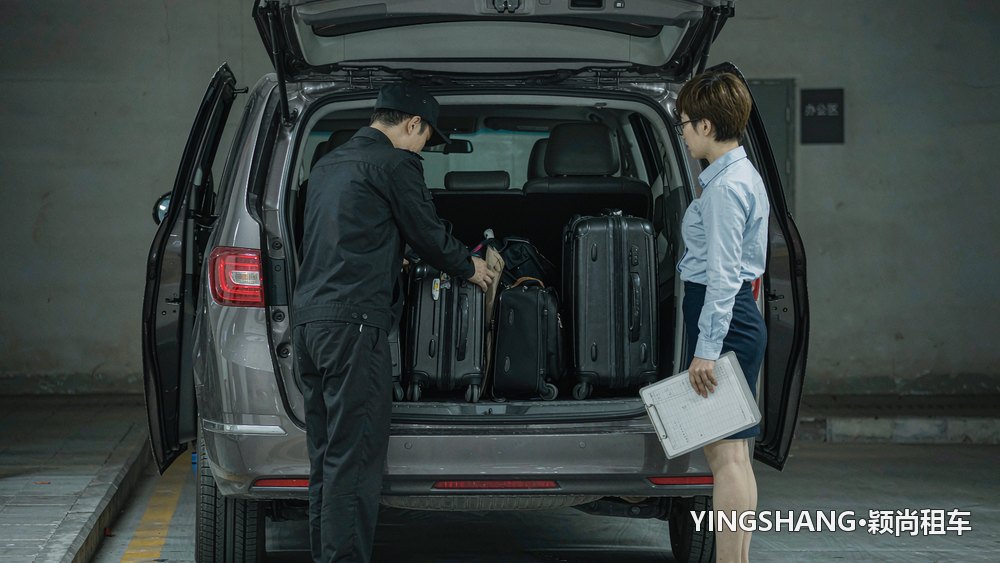
1. Set a baseline bag: how much does the trunk actually hold
Q1: How many suitcases fit in a 7-seater’s trunk?
First agree on a measuring unit: the 24-inch checked suitcase (about 67×45×26 cm) is one baseline bag; a 20-inch cabin case counts as half, a 28-inch case as one and a half. In a 2+2+3 seven-seater with all rows occupied, the trunk typically takes 3 to 4 baseline bags plus soft bags; fold the third row flat and it takes two 28-inch cases plus two baseline bags — roughly double. Two caveats: third-row mechanisms differ by model, some fold flat while others sink into the floor, and volumes vary accordingly, so have the dispatcher verify the actual vehicle; flagship vans like the Alphard have the smallest trunks when fully occupied, so reception class and load capacity often conflict — surface that conflict on a checklist before the airport, not at it.
2. The three-column method: people, cases, bags
Q2: How should luggage be allocated in the vehicle?
Split the loading sheet into three columns: hard cases (checked and equipment cases) go to the bottom layer against the rear seats; soft bags (totes, laptop bags) on the top layer and under the third-row feet; personal items (documents, samples, medicine) never enter the trunk and stay beside the seats. Record count and size per column and fix what goes where, so nobody re-opens the trunk mid-trip. One detail competitors rarely mention: while stacking the bottom layer, reserve an access slot for the warning triangle and tool kit — put the triangle outermost or under the front passenger seat. Nobody wants to dig through three layers of luggage to find a triangle on a hard shoulder. The admin fills the sheet, the driver verifies it, both sign before departure, and mid-trip disputes lose their carrier.
3. The third-row trade-off: seats or cases
Q3: Does folding the third row reduce passenger capacity?
It does. Folding the third row is legal, but rated occupancy must drop with the seats actually taken, and each belt position is counted before departure — something many teams take for granted. A hard boundary for admins: for five or more travellers, configure for everyone seated and solve luggage through the overflow plan; only for three or four travellers should folding the third row be traded for capacity. Put three fields into the dispatch sheet’s fixed format — traveller count, bag count, largest-case size — and let the dispatch desk assign vehicles on those three cells rather than headcount alone. Assigning by headcount alone is the number-one reason bags overflow on multi-person trips.
4. Ten minutes before departure: the loading checklist
Q4: What should the luggage check cover?
Run this list and resolve any miss before the door closes: one, rear visibility — hard cases must not block the interior mirror view, or remove one case and redistribute; two, restraint — after closing the tailgate, push the cases; nothing should slide, use soft bags to fill gaps; three, emergency access — the warning triangle, extinguisher and tool kit must not sit under the bottom layer; four, sliding doors — with the third row folded, check the door track is clear so the door closes fully; five, valuables and time-sensitive items — samples, documents and chilled medicine travel in the cabin, not the trunk. Print the list as an A5 card inside the tailgate: drivers self-check each trip, admins spot-check weekly.
5. When it does not fit: three overflow paths
Q5: What if the luggage exceeds capacity?
Three paths, in order: first, swap within the same seating class — replace a fixed-third-row model with one whose third row folds, priced as a like-for-like swap; second, add a second vehicle to split the bags — for groups over seven with many cases, two 7-seaters each carrying part of the luggage are usually faster and cheaper than one mid-bus, with one fewer changeover; third, stagger delivery — non-urgent bags travel the night before via the dispatcher to the hotel. There is no fourth path: squeezing in extra passengers. The occupancy red line does not bend because luggage overflows; write that into the agreement and drivers retain the right to refuse.
6. Quick reference table
Compress the rules into one table; admins tick row by row:
| Travellers | Typical luggage | Suggested setup | Dispatch sheet fields |
|---|---|---|---|
| 3-4 | 3-4 × 24-inch + personal bags | 7-seater, third row folded for capacity | Headcount, bag count, largest size |
| 5-6 | One case each + 2-3 shared | 7-seater all seated, bags in trunk | Headcount, bag count, seating note |
| 7 (full) | One cabin bag each at most | GL8 or V-Class class; slim the bags | Headcount, overflow plan |
| Overflow / equipment | Equipment cases, event materials | Two 7-seaters, or deliver ahead | Split list, delivery time |
💡 YINGSHANG note: For blank templates of the luggage-check card and the dispatch-sheet fields, call 133-7002-5039. Companies in Shanghai may also inspect vehicles at 1468 Laiyin Road, Songjiang, or visit the dispatch centre at Room 207, Building 3, 659 Jiujing Road. The fleet runs 285 self-operated Shanghai-plated vehicles across 22 models covering 7 to 53 seats, with registration certificates all held in the company’s name, full-time drivers with 8+ years of experience, and corporate settlement supported.